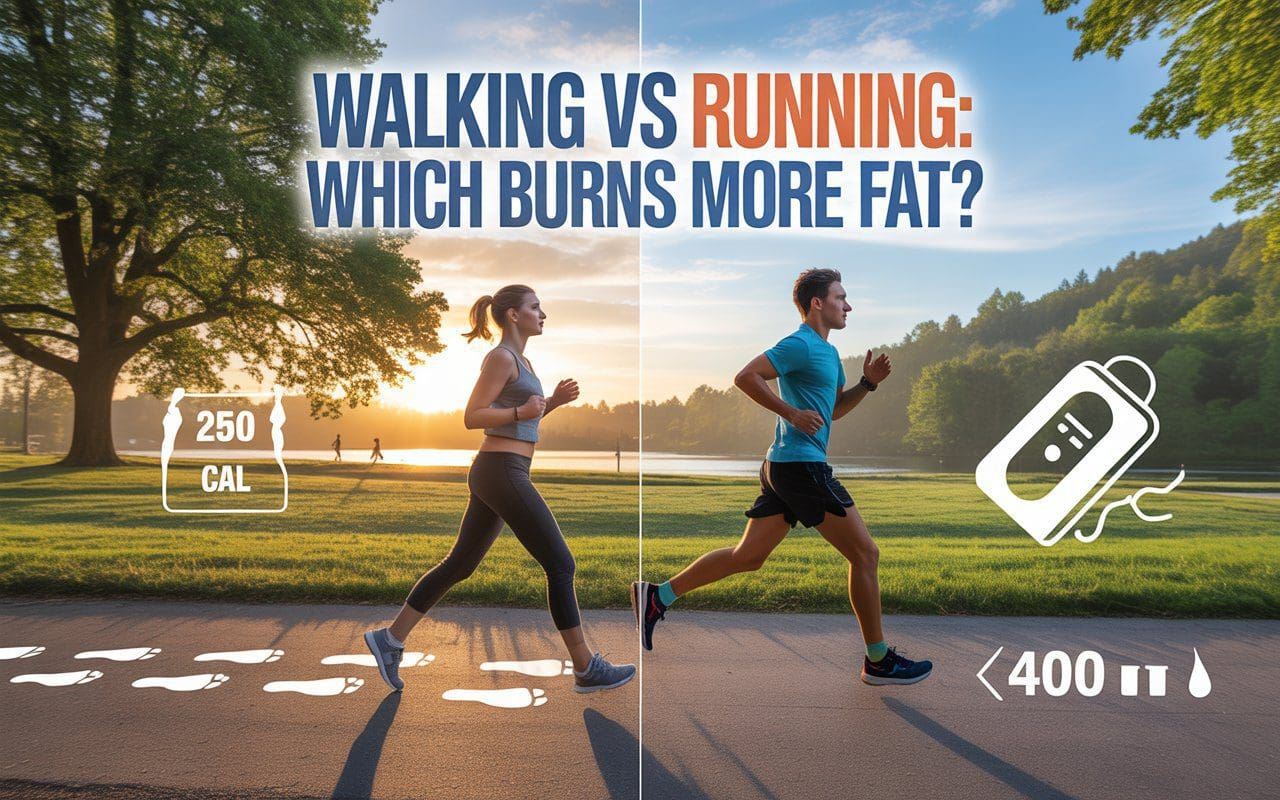
You want to lose weight — but you are confused: Is walking or running better for weight loss? 🏃♀️🚶♂️
It’s a question many fitness enthusiasts ask, and the answer may surprise you. Both walking and running can help you burn calories, lose fat, and boost your overall health, but the right choice depends on your lifestyle and goals. Walking is low-impact, easy to maintain, and great for beginners, while running burns more calories in less time and improves endurance. In this article, we’ll break down the benefits, calorie differences, and expert insights to discover whether walking or running is better for weight loss and long-term fitness success.
Walking vs Running: The Calorie Difference
Contents
When comparing is walking or running better for weight loss, calorie burn plays a big role. Both exercises burn energy, but running burns more calories per minute since it’s high-intensity.
According to Harvard Health Publishing, a 70 kg (155 lb) person burns about:
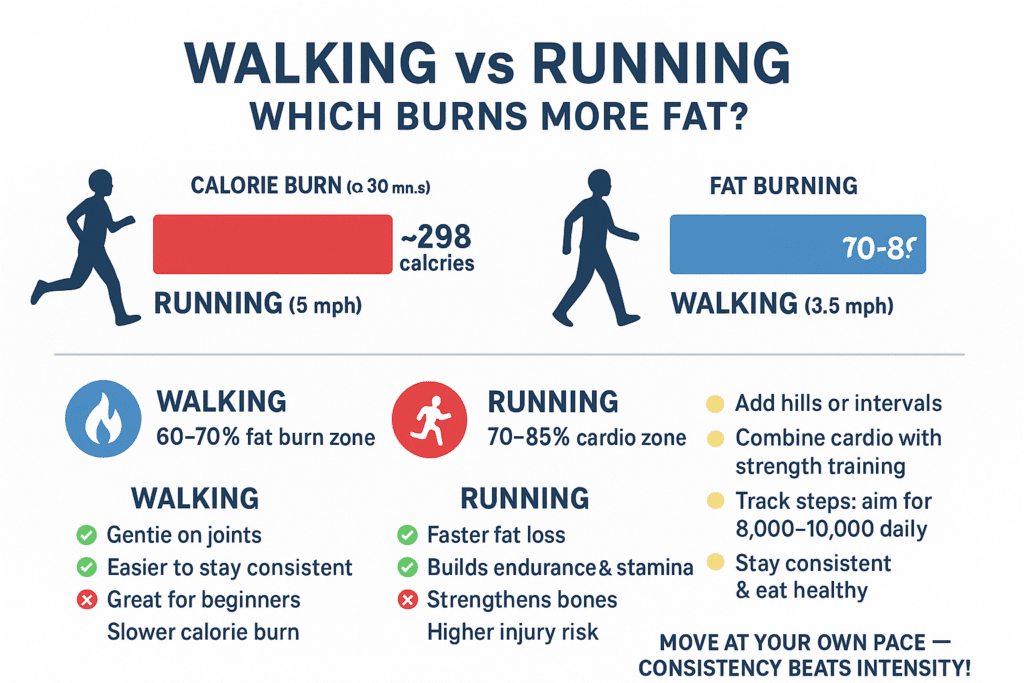
- 298 calories running for 30 minutes at 5 mph
- 149 calories walking briskly (3.5 mph) for 30 minutes
💡 Quick takeaway:
Running burns more calories per minute, However, walking can still be powerful because it’s easier to maintain over time. As a result, consistency often beats intensity — especially for beginners.
Tip: If you’re short on time, choose a quick jog. But
Tip: If you’re short on time, running gives faster results. If you prefer a slower pace, consistent walking can be just as effective in the long run.
Fat Burning: Slow and Steady Wins the Race
When discussing is walking or running better for weight loss, fat-burning efficiency matters.
- Walking keeps you in the fat-burning zone (60–70% of your maximum heart rate).
- Running pushes you into the cardio zone (70–85%), which burns more total calories but a smaller percentage from fat.
Therefore, if your goal is sustainable fat loss, walking is excellent. But if you want faster results and can handle higher intensity, running gives you an edge.
In short:
Walking = higher fat percentage burned.
Running = higher total calorie burn. Both lead to weight loss with a calorie deficit.
ALSO READ
Is Indian Food Healthy? The Surprising Truth You’ll Love
Impact on Joints and Injury Risk
If you’re new to exercise or overweight, it’s important to consider safety before deciding is walking or running better for weight loss. Running places more stress on joints, especially knees and ankles.
A 2013 study in Medicine & Science in Sports & Exercise found that walkers had 30% fewer injuries than runners.
Walking:
✅ Low-impact and gentle on joints
✅ Great for beginners and older adults
Running:
🏋️♀️ Builds endurance and strengthens bones
⚠️ Requires proper shoes and recovery time
Expert insight: Dr. I-Min Lee, professor of medicine at Harvard Medical School, notes that “for many people, walking provides similar health benefits to running with far less injury risk.”
⏱️ How Consistency Beats Intensity
When asking is walking or running better for weight loss, remember this — the best exercise is the one you’ll actually stick with.
A 2021 Harvard Health study found that consistent, moderate activity (like brisk walking) produced long-term fat loss and better heart health than inconsistent high-intensity workouts.
Try this simple plan:
- Start walking 30–45 minutes daily.
- Gradually increase pace or add hills.
- Once comfortable, add short jogging intervals or weekend runs.
Real-world example: Sarah, a 40-year-old teacher, lost 6 kg in 3 months by walking daily and tracking her calories — no gym required!
💪 Tips to Maximize Weight Loss
No matter which option you choose, you can enhance results with smart habits.
- To boost your metabolism, add strength training twice a week — it helps build lean muscle and burn more calories even at rest.
- In addition, track your steps consistently (aim for 8,000–10,000 daily) to stay active throughout the day.
- When it comes to food, focus on a balanced diet — remember, you can’t outrun poor eating habits.
- Finally, make sure to sleep well and stay hydrated to support recovery and promote fat burn.
🧠 Final Verdict: Is Walking or Running Better for Weight Loss?
So, is walking or running better for weight loss?
The answer depends on your fitness level and goals.
🏃♀️ Running burns calories faster and builds endurance.
🚶♂️ Walking is safer, easier to sustain, and still extremely effective.
If you’re a beginner, start with walking, then slowly add jogging intervals. Eventually, your stamina and calorie burn will rise naturally.
Because consistency matters more than speed, the “best” exercise is the one that makes you feel strong, confident, and motivated.
❓ FAQs
Q1. Can I lose weight by walking 30 minutes a day?
✅ Yes! Walking 30 minutes daily, especially briskly, can help you lose weight if you maintain a calorie deficit and eat healthy.
Q2. Is walking or running better for losing belly fat??
Running burns more calories, helping reduce belly fat faster. But combining walking and strength training can also flatten your midsection effectively.
Q3. How many steps a day are needed to lose weight??
Aim for 8,000–10,000 steps per day to stay active, burn calories, and boost metabolism.
Q4. Can walking be as effective as running for weight loss?
Yes — if you’re consistent and mindful about your diet. Walking is safer for beginners and easier to sustain long-term.
Q5. What’s the best time to walk or run for weight loss?
Morning workouts can jumpstart your metabolism, but the best time is whenever you can stay consistent.
Is walking or running better for losing belly fat?
✨ Final Thought
Whether you walk or run, remember: movement is medicine.
Stay active, stay consistent, and your body will reward you with energy, strength, and long-lasting weight loss. 🌟
🩺 References
- Harvard Health Publishing. Calories burned in 30 minutes for people of three different weights.
- Medicine & Science in Sports & Exercise, 2013. Running vs. walking and injury risk.
- Centers for Disease Control and Prevention (CDC). Physical Activity Guidelines for Americans.