
What is physical health is a question many people ask; however, the answer is more than just “being fit” or “not being sick.”
From a physiotherapy perspective, physical health refers to how efficiently your body functions, moves, and recovers in daily life. In other words, it is not only about exercise, but also about nutrition, sleep, and overall body balance.
Moreover, when your physical health is strong, your energy levels improve, your movement becomes easier, and your body handles stress more effectively. Therefore, understanding it correctly is the first step toward improving it.
In this guide, I’ll explain physical health in simple, practical terms based on both clinical physiotherapy knowledge and real-world health principles.
You’ll learn:
- What physical health actually means
- The 4 key components most people overlook
- Common myths that slow progress
- A simple daily routine to improve it
What Is Physical Health? (Simple Definition)
Contents
- 1 What Is Physical Health? (Simple Definition)
- 2 Why Physical Health Matters More Than You Think
- 3 The 4 Core Components of Physical Health
- 4 Physical Health in Clinical Practice (Simple Analogy)
- 5 Your Daily Physical Health Checklist
- 6 Physical Health and Mental Health Connection
- 7 ALSO READ
- 8 Common Myths About Physical Health
- 9 How to Improve Your Physical Health (Simple Plan)
- 10 Conclusion
- 11 Medical Disclaimer
- 12 FAQs: Physical Health Explained
Physical health refers to the overall condition and functioning of your body—how well your muscles, joints, heart, and internal systems work together to support daily life without pain, excessive fatigue, or dysfunction.
From a physiotherapy perspective, physical health is also about:
- Movement quality
- Strength and endurance
- Recovery capacity
- Functional independence
It is not about having a perfect body or being highly athletic. It is about having a body that works efficiently in real life.
Even the World Health Organization (WHO) describes health as complete physical well-being, not just the absence of disease.
In simple terms, good physical health looks like:
- Waking up with energy
- Moving without pain or stiffness
- Recovering normally after activity
- Maintaining stamina throughout the day
Why Physical Health Matters More Than You Think
Your physical health affects every part of your life including mental focus, emotional balance, and productivity.
In clinical settings, I often see a direct link between poor physical health and:
- Chronic fatigue
- Muscle and joint pain
- Low mood and anxiety
- Reduced functional capacity
Good physical health helps you:
- Maintain steady energy levels
- Improve immunity and recovery
- Reduce risk of chronic diseases
- Enhance mental well-being
- Maintain independence with age
The CDC (Centers for Disease Control and Prevention) confirms that regular physical activity significantly reduces the risk of heart disease, diabetes, and other chronic conditions.
The 4 Core Components of Physical Health
Physical health is not one single factor, it is a system made of four interconnected components.
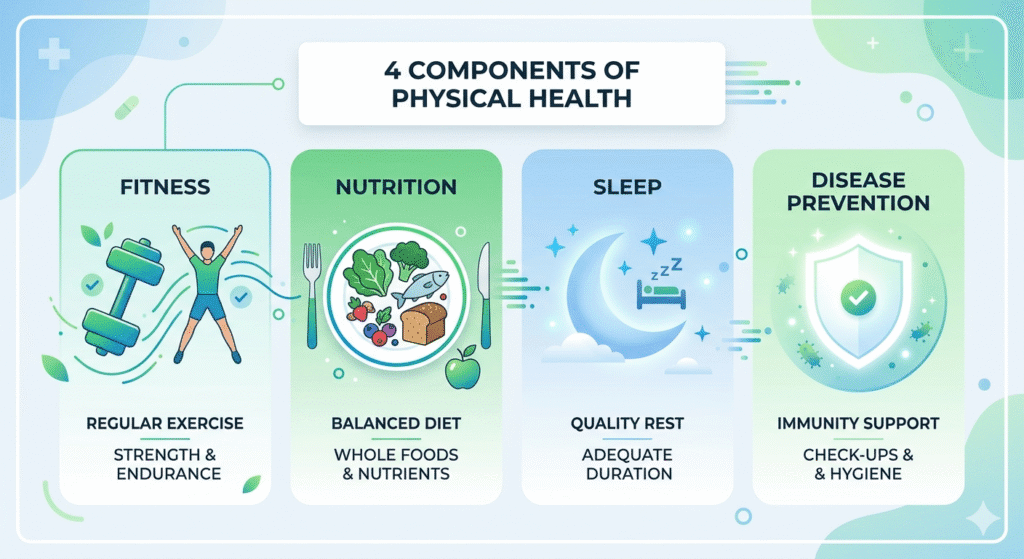
1. Physical Fitness (Strength, Endurance, Mobility)
This includes your ability to move, lift, walk, and perform daily tasks efficiently.
As a physiotherapist, I emphasize functional fitness, not just gym performance.
Even simple activities like walking 20–30 minutes daily improve:
- Cardiovascular health
- Joint mobility
- Muscle strength
Simple check:
Can you climb stairs or carry groceries without excessive fatigue or discomfort?
2. Nutrition (Fuel for Your Body)
Your body functions based on what you consume.
Poor nutrition often leads to:
- Low energy
- Slower recovery
- Weaker immunity
Basic principles that work:
- Eat whole, minimally processed foods
- Include protein, fruits, and vegetables
- Stay hydrated
- Avoid excessive sugar and ultra-processed food
Nutrition directly supports tissue repair, muscle recovery, and immune function.
3. Sleep and Recovery
Sleep is one of the most underestimated pillars of physical health.
During sleep, your body:
- Repairs muscles
- Balances hormones
- Strengthens immunity
- Restores energy
From a clinical standpoint, poor sleep significantly increases:
- Pain sensitivity
- Injury risk
- Fatigue levels
Healthy target: 7–8 hours of quality sleep daily.
4. Disease Prevention & Lifestyle Habits
This includes proactive steps to maintain long-term health:
- Regular medical checkups
- Vaccinations
- Posture and ergonomic awareness
- Stress management
- Avoiding smoking and excessive alcohol
Most chronic conditions develop gradually—and are often preventable with consistent habits.
Physical Health in Clinical Practice (Simple Analogy)
Think of your body like a movement system.
- Nutrition = fuel
- Sleep = repair system
- Exercise = maintenance
- Prevention = protection layer
When one part is neglected, the entire system becomes inefficient over time.
Your Daily Physical Health Checklist
Here is a simple, evidence-informed routine I often recommend:
| Habit | Goal | Benefit |
|---|---|---|
| Walking or movement | 20–30 min/day | Improves circulation & mobility |
| Water intake | 6–8 glasses | Supports metabolism & energy |
| Fruits & vegetables | 2–3 servings | Boosts immunity |
| Sleep | 7–8 hours | Recovery & hormonal balance |
| Break from sitting | Every 1–2 hours | Prevents stiffness & posture issues |
| Limit junk food | Occasional | Reduces disease risk |
Consistency matters more than perfection.
Physical Health and Mental Health Connection
Physical and mental health are deeply connected.
In both research and clinical observation, regular physical activity:
- Reduces stress hormones
- Improves mood regulation
- Enhances sleep quality
- Lowers anxiety symptoms
The National Institute of Mental Health (NIMH) also supports physical activity as an effective supportive strategy for mental well-being.
ALSO READ
Why is Mental Health Important: A Simple, Clear, Guide
Common Myths About Physical Health
Myth 1: Physical health is only about exercise
Reality: Sleep, nutrition, and recovery are equally important.
Myth 2: You need intense workouts for results
Reality: Moderate, consistent movement is more effective and safer long-term.
Myth 3: Healthy living is expensive
Reality: Walking, home-cooked meals, and proper sleep cost nothing.
How to Improve Your Physical Health (Simple Plan)
Start small and build gradually:
Week 1: 20-minute daily walk
Week 2: Improve one meal per day
Week 3: Fix sleep schedule
Week 4: Add mobility/stretching routine
In physiotherapy practice, I consistently see that small, consistent habits create the biggest long-term improvements.
Conclusion
Physical health is not about perfection, it is about function.
As a physiotherapist, I see every day that the strongest improvements come from simple, consistent habits not extreme routines.
Start small:
- Move daily
- Eat better
- Sleep well
Your body responds to consistency, not intensity.
Medical Disclaimer
This article is for educational purposes only. It does not replace professional medical advice. If you have pain, chronic symptoms, or medical conditions, consult a qualified healthcare professional.
FAQs: Physical Health Explained
Q1. What is physical health in simple words?
Physical health means your body is functioning well, allowing you to move, work, and live without constant pain or fatigue.
Q2. What are the main components of physical health?
Physical fitness, nutrition, sleep and recovery, and disease prevention.
Q3. Can I improve physical health without a gym?
Yes. Walking, home exercises, proper sleep, and nutrition are enough to improve health significantly.
Q4. Is physical health only exercise?
No. Exercise is only one part. Recovery, nutrition, and lifestyle are equally important.
Q5. How are physical and mental health connected?
Good physical health improves mood, reduces stress, and supports better mental well-being.
Last Updated: April 2026 | Written by a Physiotherapist