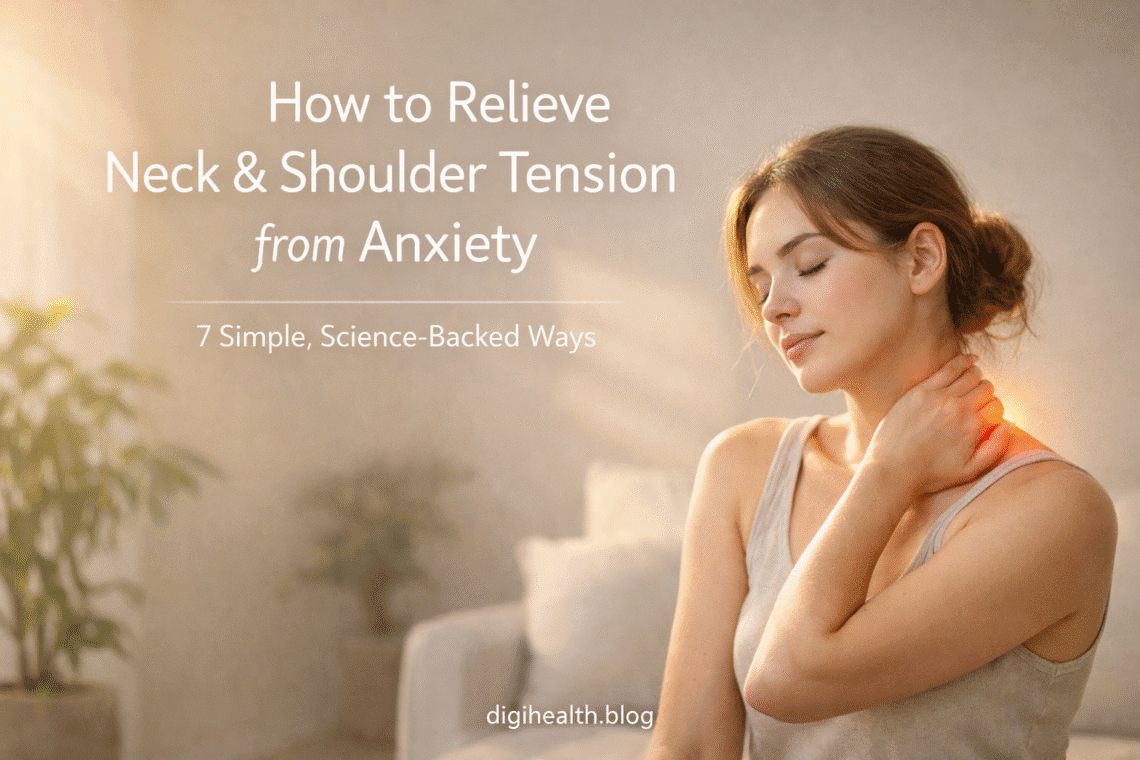
How to Relieve Neck & Shoulder Tension from Anxiety is a common concern for people dealing with stress and persistent muscle tightness.
Your neck feels tight.
Your shoulders feel heavy.
And yet, no matter how much you rest, the tension doesn’t go away.
At first, it may seem like a minor issue. However, this discomfort is not just “in your head.”
In fact, research shows that anxiety and psychological stress are strongly linked to neck pain, influencing both muscle activity and how the brain processes pain (Kazeminasab et al., 2022; Alghamdi et al., 2023).
👉 You can also explore how stress affects the body via the World Health Organization:
https://www.who.int/news-room/questions-and-answers/item/stress
🧠 Why Anxiety Causes Neck and Shoulder Tension
Contents
- 1 🧠 Why Anxiety Causes Neck and Shoulder Tension
- 1.1 🔬 Clinical Insight
- 1.2 ALSO READ
- 1.3 ⚠️ Common Signs of Anxiety-Related Muscle Tension
- 1.4 ✅ 7 Evidence-Based Ways to Relieve Neck & Shoulder Tension
- 1.5 🌙 Why Neck Tension Gets Worse at Night
- 1.6 🌿 Lifestyle Tips to Prevent Anxiety-Related Tension
- 1.7 🚨 When to See a Doctor
- 1.8 📌 Conclusion
- 1.9 Author & Medical Disclaimer
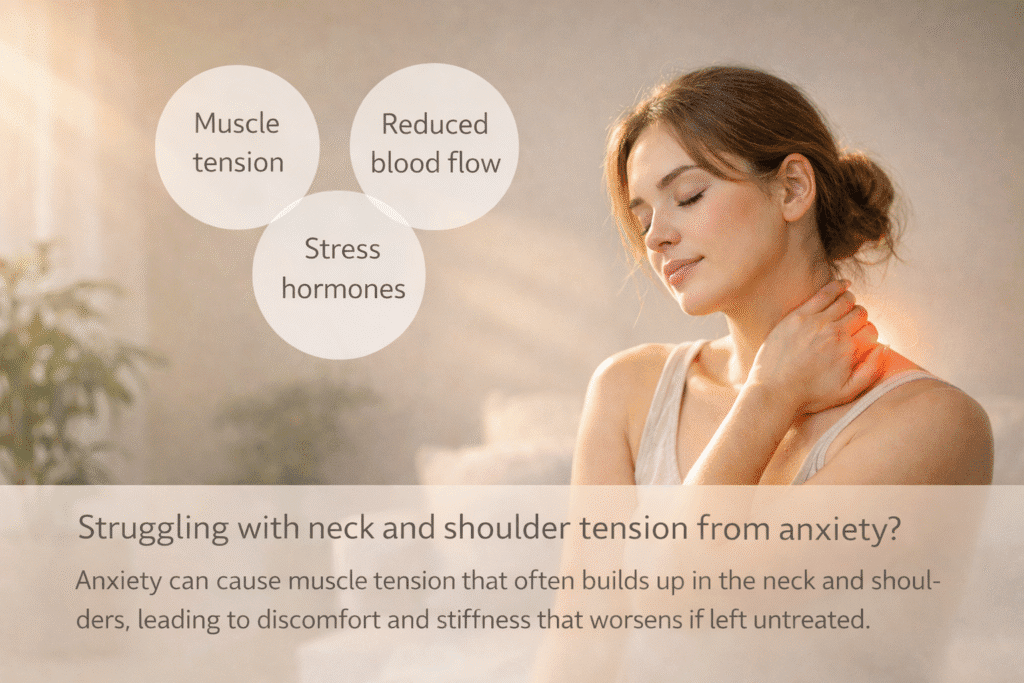
When you feel anxious, your body activates the fight-or-flight response, which is controlled by the sympathetic nervous system.
As a result, several physiological changes occur:
- Continuous low-level muscle contraction
- Reduced blood flow, which leads to metabolite buildup
- Increased pain sensitivity
Over time, this can contribute to central sensitization, meaning your nervous system becomes more sensitive to pain signals (Kazeminasab et al., 2022).
👉 As a result, the trapezius muscle is especially vulnerable and may remain activated even at rest.
🔬 Clinical Insight
In clinical observations, individuals with anxiety frequently present with persistent neck and shoulder tightness despite having no structural abnormalities. Therefore, the issue is not purely muscular; rather, it also involves nervous system dysregulation.
Moreover, understanding how to relieve neck & shoulder tension from anxiety starts with addressing both physical and neurological factors.
ALSO READ
What Is Meaning of Physical Health? A Simple, Trusted Human Guide
⚠️ Common Signs of Anxiety-Related Muscle Tension
Typically, symptoms may include:
- Tight or stiff neck
- Heavy or aching shoulders
- Tension headaches
- Difficulty relaxing muscles
Additionally, studies show that higher psychological stress is significantly associated with increased neck pain symptoms (Daher & Halperin, 2021).
✅ 7 Evidence-Based Ways to Relieve Neck & Shoulder Tension
1. Deep Breathing (Regulates the Nervous System)
First of all, slow and controlled breathing helps shift your body from a stress state to a relaxed state.
As a result, it improves autonomic balance and reduces muscle tension (Yahalom et al., 2025).
2. Gentle Neck Stretches
Similarly, stretching plays an important role in recovery. It helps:
- Increase blood flow
- Improve flexibility
- Reduce pain intensity
In fact, clinical evidence shows that regular stretching significantly reduces neck discomfort and fatigue (Niazi et al., 2025).
https://www.mayoclinic.org/diseases-conditions/neck-pain/symptoms-causes/syc-20375581
3. Shoulder Reset Technique
In addition, simple posture resets can interrupt unconscious muscle contraction patterns.
👉 Consequently, this helps retrain neuromuscular control and reduce stiffness over time.
4. Heat Therapy
Meanwhile, applying heat is a simple yet effective method.
It works by:
- Improving circulation
- Relaxing tight muscles
- Reducing stiffness
Therefore, it is widely recommended in musculoskeletal pain management (Wang et al., 2024).
5. Posture Correction
On the other hand, poor posture combined with stress can worsen the problem.
For example, prolonged sitting and forward head posture increase muscle load.
As a result, research links poor posture with a higher risk of neck pain.
6. Progressive Muscle Relaxation (PMR)
Furthermore, this technique involves systematically tightening and relaxing muscle groups.
Because of this, it helps:
- Reduce muscle tension
- Lower stress levels
- Improve body awareness
7. Stay Physically Active
Finally, staying active is essential for long-term relief.
Movement helps:
- Reduce stress hormones like cortisol
- Improve circulation
- Prevent stiffness
In contrast, sedentary behavior is strongly associated with chronic neck pain (Kazeminasab et al., 2022).
👉 Physical activity recommendations by World Health Organization:
https://www.who.int/news-room/fact-sheets/detail/physical-activity
🌙 Why Neck Tension Gets Worse at Night
Throughout the day, stress tends to accumulate. Meanwhile, muscles may remain contracted for long periods.
In addition, poor posture further increases the load on your neck and shoulders.
👉 Consequently, by evening, both muscle fatigue and pain sensitivity increase.
🌿 Lifestyle Tips to Prevent Anxiety-Related Tension
To prevent recurring tension, consider the following:
- Get 7–8 hours of sleep
- Limit caffeine intake
- Practice mindfulness or relaxation techniques
- Take regular movement breaks
Even so, consistency is key. In fact, even short daily relaxation practices can significantly reduce muscle tension over time.
https://www.mindful.org/how-to-practice-mindfulness
🚨 When to See a Doctor
However, you should seek medical attention if you experience:
- Severe or persistent pain
- Numbness or tingling
- Muscle weakness
- History of trauma or injury
📌 Conclusion
In conclusion, anxiety-related neck and shoulder tension is a real, science-backed condition involving both the body and the nervous system.
If you’re wondering how to relieve neck & shoulder tension from anxiety, the answer lies in consistent daily habits.
Ultimately, small actions—such as breathing exercises, stretching, and regular movement—can make a significant difference in reducing tension and improving your quality of life.
Author & Medical Disclaimer
Author: Dr Uroosa Shahid , physiotherapist and Health content writer with a focus on stress-related physical symptoms and musculoskeletal wellness.
Disclaimer: This article is for informational purposes only and does not replace professional medical advice, diagnosis, or treatment.