
What is wellbeing, and why do so many people feel exhausted even when life appears fine on the surface?
Quite often, that quiet fatigue is a sign that your wellbeing is out of balance — not that something is wrong with you.
In today’s fast-paced world, many people focus on productivity or physical health. However, they often overlook how their life actually feels. As a result, stress builds quietly. Wellbeing, therefore, looks at the full picture — not just staying healthy, but functioning well emotionally, mentally, and socially.
What Is Wellbeing? (A Clear Definition)
Contents
What is wellbeing?
At its core, wellbeing is the state of feeling good, functioning effectively, and living with a sense of purpose.
More specifically, it reflects:
- Your body’s health and everyday energy levels
- Your emotional balance and mental resilience
- The quality of your relationships and social connections
- How well you cope with stress and daily responsibilities
In modern wellbeing science, the focus is not merely constant happiness. Instead, it is long-term balance, adaptability, and quality of life. In short, wellbeing is how well your life works — not just how it looks.
Why Wellbeing Matters Today
Today, life places constant pressure on time, attention, and mental health. For example, long working hours, digital overload, financial strain, and social expectations have made feeling “on edge” almost normal.
Because of this, many people attempt to fix the problem by focusing on just one area — most often physical health. While this approach can help temporarily, it frequently fails to resolve ongoing stress, low mood, or burnout. This is because wellbeing is multi-dimensional, rather than one-dimensional.
Why the 7 Pillars of Wellbeing Are Important
Think of wellbeing as a structure supported by seven pillars.
If one pillar weakens, the entire structure becomes unstable.
The 7 pillars of wellbeing help to:
- Reduce chronic stress and burnout
- Improve mental and emotional health
- Increase focus, energy, and motivation
- Support long-term life satisfaction
Because of this, the framework is widely used in mental health, workplace wellness, and lifestyle-focused care. Overall, it addresses the whole person rather than isolated symptoms.
The 7 Pillars of Wellness Explained
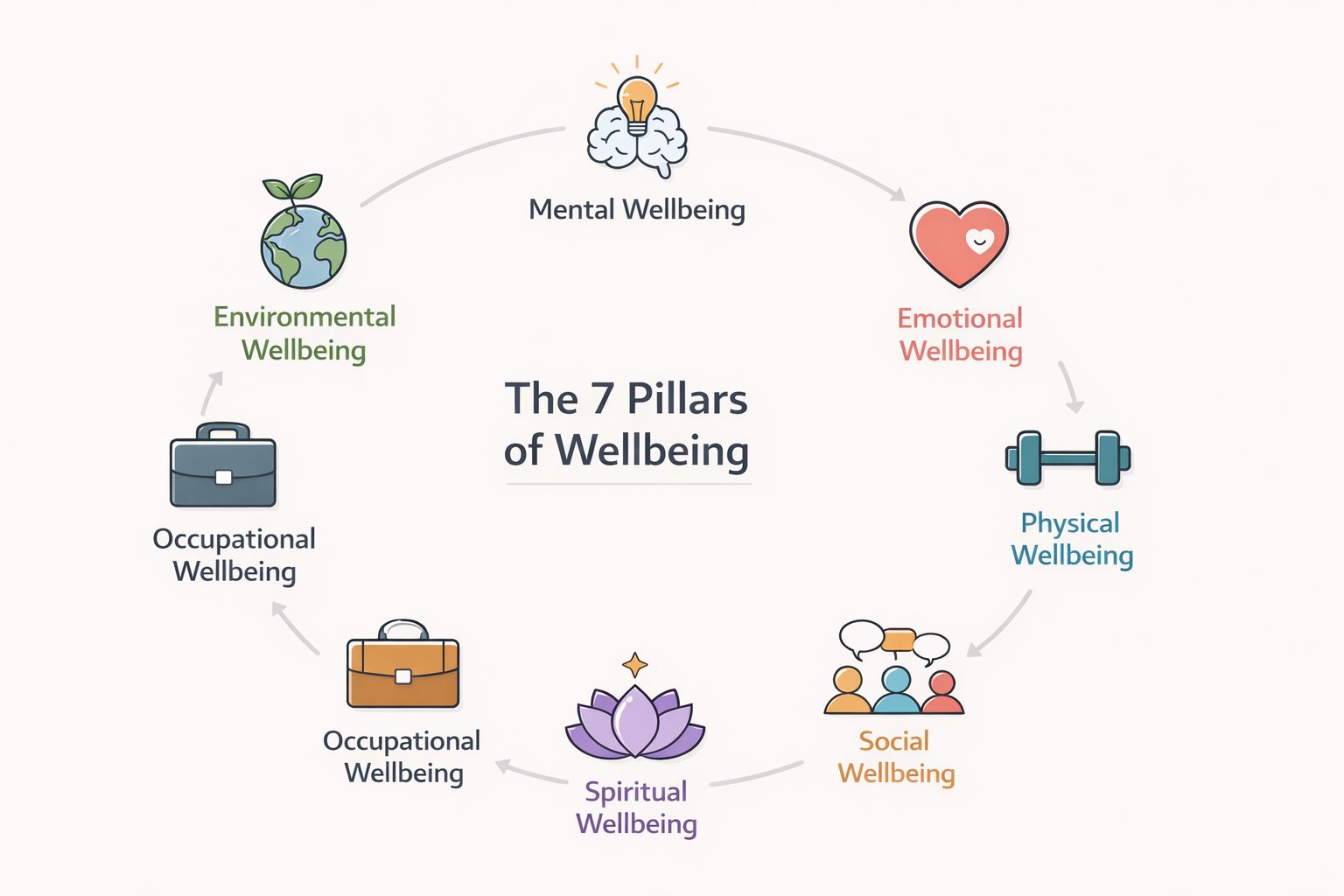
1. Physical Wellness
First and foremost, physical wellness supports your body so it can support your life.
It includes:
- Regular physical activity
- Balanced, nourishing food
- Quality sleep
- Preventive healthcare
Even small habits matter. For instance, short daily movement can significantly improve mood and energy over time.
2. Mental Wellness
Mental wellness, meanwhile, relates to how you think, focus, and handle pressure.
It involves:
- Managing stress
- Maintaining concentration
- Coping with challenges and change
Importantly, good mental wellbeing does not mean having no problems. Rather, it means having the tools to manage them without feeling overwhelmed.
3. Emotional Wellness
Emotional wellness refers to the ability to understand and regulate emotions in healthy ways.
It includes:
- Emotional awareness
- Self-compassion
- Healthy emotional expression
Emotions are part of daily life. Therefore, the goal is not to suppress them, but to respond to them thoughtfully and effectively.
4. Social Wellness
Humans are social by nature. As a result, relationships play a major role in wellbeing.
Social wellness includes:
- Supportive personal connections
- Feeling heard and valued
- A sense of belonging
When social connections are strong, they can buffer stress and reduce feelings of isolation.
5. Spiritual Wellness
Spiritual wellness, on the other hand, relates to meaning and values.
It may include:
- A sense of purpose
- Personal beliefs or values
- Gratitude or reflection
- Connection to nature or faith
As a result, people with a strong sense of meaning often cope better during difficult times.
6. Occupational Wellness
Occupational wellness reflects how you experience your work or primary daily role.
It means:
- Feeling productive and capable
- Maintaining work-life boundaries
- Finding purpose in what you do
Whether paid or unpaid, this pillar matters because work and responsibility shape daily life.
7. Environmental Wellness
Finally, environmental wellness focuses on your surroundings.
It includes:
- Safe and comfortable living spaces
- Access to natural light and fresh air
- Organised, calming environments
Even small environmental changes, therefore, can reduce mental stress and improve focus.
How the 7 Pillars Work Together
These pillars are deeply connected.
For example, poor sleep affects mood and focus. Likewise, ongoing work stress impacts mental wellbeing. Meanwhile, strong relationships improve resilience.
Because of this interconnection, wellbeing works best when approached as a whole rather than in isolated parts.
Simple Ways to Improve Quality of life
You do not need major changes all at once. Instead, start with small, realistic steps:
- Walk most days
- Check in with one trusted person weekly
- Practise gratitude before sleep
- Set clearer boundaries around work or screen time
Over time, these small habits add up. As a result, consistency matters more than perfection.
ALSO READ
Morning Journaling: A Simple Habit for Better Mental Health
What Is Well-being in Everyday Life?
So, what is wellbeing in real terms?
It is not about feeling happy all the time. Rather, it is about feeling steady, supported, and able to manage life’s demands.
By strengthening the 7 pillars of wellbeing, you gradually build a healthier and more balanced life. Ultimately, choosing just one pillar to focus on today can make a meaningful difference.
FAQs:
What is wellbeing in simple terms?
Wellbeing means staying healthy, emotionally balanced, and living a meaningful life.
Why are the 7 pillars of wellness important?
They ensure that all major areas of life are supported rather than focusing on only one.
Can wellbeing improve without perfect health?
Yes. Even so, emotional, social, and mental wellbeing can improve quality of life despite health challenges.
How long does it take to improve wellbeing?
In many cases, people notice positive changes within a few weeks when habits are consistent.
Is wellbeing the same as happiness?
No. While happiness is part of wellbeing, wellbeing also includes resilience, balance, and purpose.