What is robotic knee replacement surgery? Living with knee pain can slowly take away your independence. Over time, simple activities like walking, climbing stairs, or even standing for a few minutes can become exhausting and painful.
As a result, many people begin avoiding movement altogether. Consequently, this can affect not only physical health but also confidence, mood, and overall quality of life. However, modern orthopedic medicine has made significant advances to address this problem.
That is exactly where modern orthopedic medicine steps in.
Therefore, if you are wondering what is robotic knee replacement, this guide will explain the procedure clearly, safely, and simply. Moreover, it will help you understand how this technology works, who it is best for, and what recovery looks like—so you can make an informed decision with confidence.
What Is Robotic Knee Replacement Surgery?
Contents
- 1 What Is Robotic Knee Replacement Surgery?
- 2 ALSO READ
- 3 How Does Robotic Knee Replacement Surgery Work?
- 4 Why Accuracy Matters in Knee Replacement
- 5 Benefits of Robotic Knee Replacement Surgery
- 6 Robotic vs Traditional Knee Replacement Surgery
- 7 Who Is a Good Candidate for Robotic Knee Replacement?
- 8 Recovery After Robotic Knee Replacement
- 9 Role of Physiotherapy After Robotic Knee Replacement
- 10 Is Robotic Knee Replacement Safe?
- 11 Conclusion: Is Robotic Knee Replacement Worth It?
- 12 Frequently Asked Questions (FAQs)
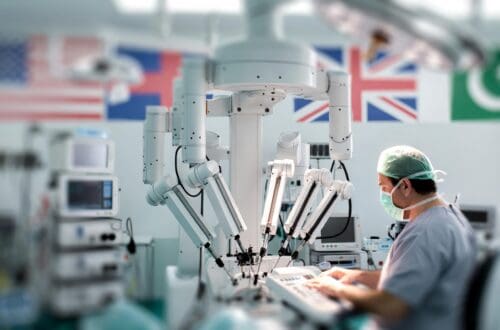
Robotic knee replacement is an advanced form of knee replacement surgery.
In this procedure, a robotic-assisted system helps surgeons perform the operation with greater precision and control.
However, it is important to understand a key point:
- The robot does not perform surgery on its own
- A trained orthopedic surgeon controls every step
- The robotic system works as a smart guiding tool
In other words, the technology enhances the surgeon’s skill rather than replacing it.
ALSO READ
From Mature to Emerging: Robotic Surgery in USA, UK, Pakistan
How Does Robotic Knee Replacement Surgery Work?
Step-by-Step Explanation
1. 3D Knee Mapping
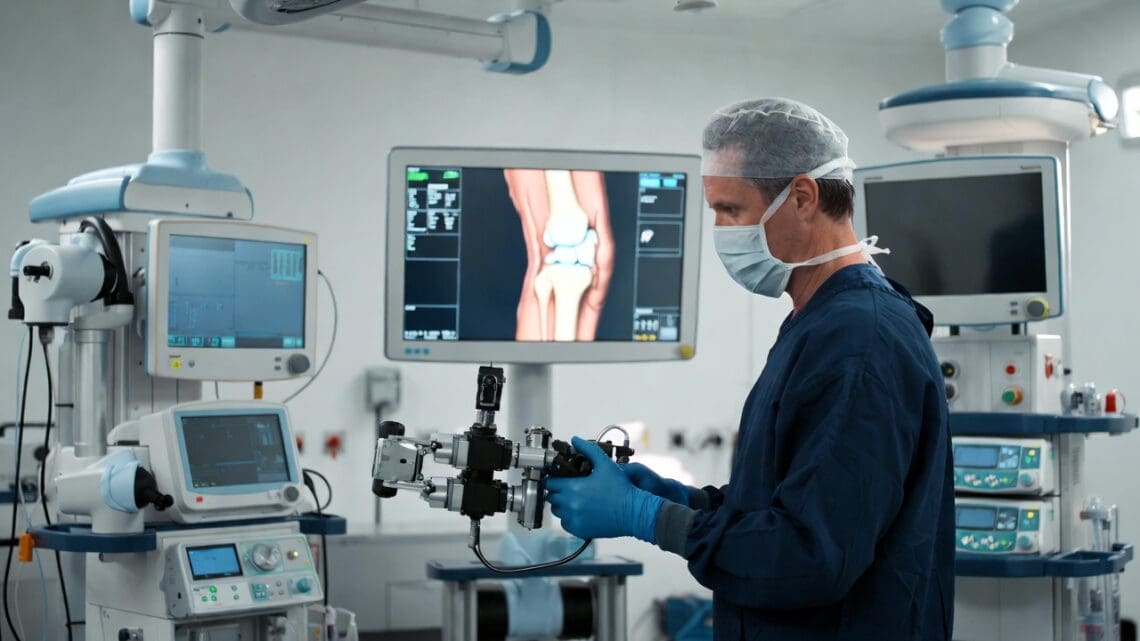
First, a detailed scan creates a 3D image of your knee.
As a result, the surgeon can clearly see bone shape, cartilage damage, and joint alignment.
2. Personalized Surgical Planning
Next, the surgeon designs a custom surgical plan.
Because every knee is different, this plan is tailored to your exact anatomy.
3. Robotic Assistance During Surgery
During surgery, the robotic system continuously guides the surgeon.
At the same time, it helps ensure:
- Precise bone cuts
- Protection of healthy tissue
- Correct alignment throughout the procedure
4. Accurate Implant Placement
Finally, the artificial knee joint is placed with high accuracy.
Consequently, joint balance and movement improve.
Overall, robotic knee replacement is far more customized than traditional surgery.
Why Accuracy Matters in Knee Replacement
Accuracy plays a critical role in long-term success.
Even a small alignment error can eventually cause pain, stiffness, or early implant failure.
Because of this, precision is essential.
Multiple orthopedic studies have shown that robotic-assisted knee replacement can improve implant alignment accuracy by up to 30% compared to manual methods.
To explain it simply, think of GPS navigation.
You can drive without it; however, guidance makes the journey smoother and safer.
Benefits of Robotic Knee Replacement Surgery
Robotic-assisted surgery offers several clear advantages.
Moreover, these benefits directly affect recovery and long-term comfort.
- More precise implant placement
- Less damage to healthy tissue
- Reduced post-operative pain
- Faster recovery
- Better knee movement
- Longer implant lifespan
As a result, many patients report higher satisfaction and improved confidence after surgery.
Robotic vs Traditional Knee Replacement Surgery
Key Differences
| Feature | Traditional Surgery | Robotic Knee Replacement |
|---|---|---|
| Precision | Surgeon’s experience | Surgeon + robotic guidance |
| Customization | Standard | Personalized |
| Tissue Damage | More | Less |
| Recovery | Slower | Faster |
Therefore, robotic assistance adds an extra layer of safety and accuracy.
Who Is a Good Candidate for Robotic Knee Replacement?
You may be a suitable candidate if you have:
- Severe knee arthritis
- Chronic knee pain not improving with therapy
- Difficulty walking or standing
- Knee deformities such as bow legs or knock knees
However, the final decision should always be made after consultation with an orthopedic specialist.
Recovery After Robotic Knee Replacement
Recovery is usually smoother with robotic-assisted surgery.
In fact, most patients experience:
- Walking within 24–48 hours
- Shorter hospital stay
- Faster return to daily activities
- Reduced need for strong pain medication
Although recovery differs from person to person, robotic assistance often leads to more predictable healing.
Role of Physiotherapy After Robotic Knee Replacement

Physiotherapy is just as important as the surgery itself.
Without proper rehabilitation, even the most accurate surgery may not deliver optimal results.
Why Physiotherapy Matters
After surgery, muscles and joints need retraining.
Therefore, physiotherapy helps to:
- Restore knee movement
- Improve muscle strength
- Reduce stiffness and swelling
- Prevent complications
- Speed up return to normal life
Typical Physiotherapy Timeline
First 48 hours
- Gentle knee movement
- Assisted walking
- Circulation and breathing exercises
First 6 weeks
- Range-of-motion exercises
- Strengthening of thigh and hip muscles
- Gait and posture training
After 6 weeks
- Advanced strengthening
- Balance and coordination work
- Gradual return to daily and recreational activities
Consequently, patients who follow a structured physiotherapy program usually achieve better long-term outcomes.
Is Robotic Knee Replacement Safe?
Yes, robotic knee replacement is FDA-approved and widely used worldwide.
According to orthopedic associations, complication rates are similar or even lower than traditional knee replacement when performed by trained surgeons.
Nevertheless, experience matters.
Therefore, choosing a surgeon skilled in robotic-assisted procedures is essential.
Conclusion: Is Robotic Knee Replacement Worth It?
Now that you clearly understand what is robotic knee replacement surgery, the decision often becomes more informed and confident. Overall, this approach represents a significant advancement in knee surgery by combining surgical expertise with data-driven technology.
As a result, robotic knee replacement offers a more precise, patient-centered solution that focuses on accurate alignment, joint balance, and long-term function. For many patients, this translates into less post-operative pain, improved movement, and a smoother, more predictable recovery.
Moreover, for individuals whose knee pain limits daily activities and independence, robotic knee replacement may provide a reliable path toward restoring mobility and quality of life. However, treatment decisions should always be individualized.
👉 Therefore, always discuss your options with an experienced orthopedic surgeon who can evaluate your condition, overall health, and rehabilitation needs.
Your knees carry you through life.
Therefore, they deserve the best care—guided by knowledge, precision, and experience.
Frequently Asked Questions (FAQs)
Q1. What is robotic knee replacement surgery?
It is a knee replacement procedure where a robotic system assists the surgeon for improved accuracy and alignment.
Q2. Is robotic knee replacement better than traditional surgery?
In many cases, yes. It offers better precision, faster recovery, and improved joint balance.
Q3. How long does a robotic knee replacement last?
With proper care and physiotherapy, implants can last 15–20 years or longer.
Q4. Is robotic knee replacement painful?
Most patients experience less pain due to minimal tissue damage.
Q5. Who should consider robotic-assisted knee replacement?
Patients with severe arthritis, chronic pain, or mobility issues should consult an orthopedic specialist.