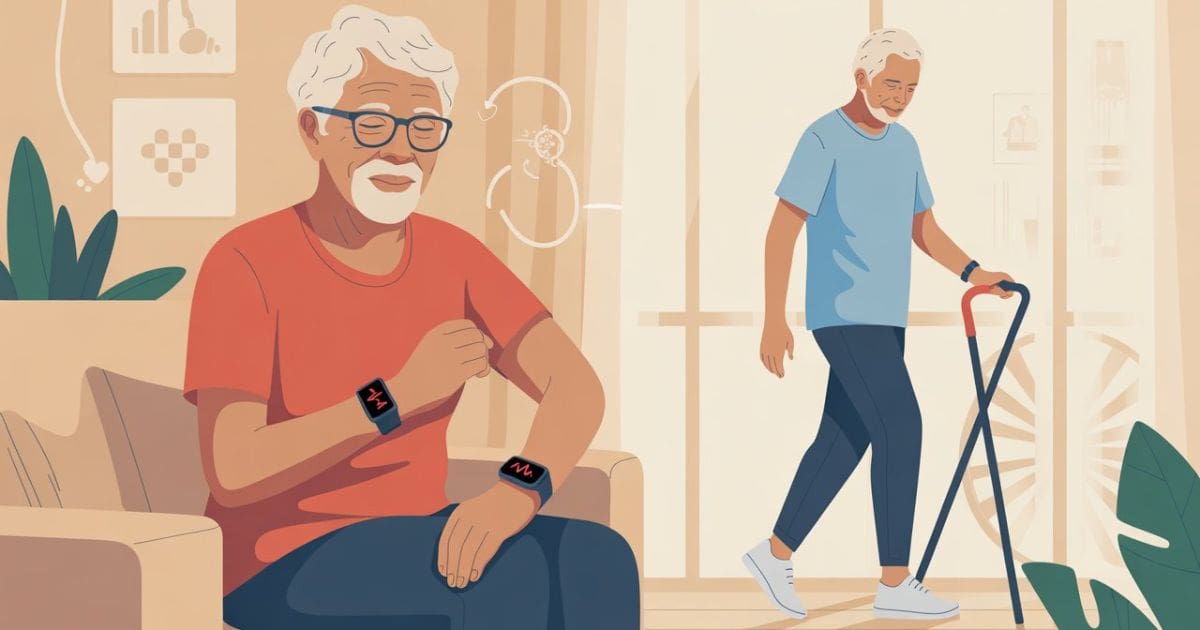
Wearable technology for the elderly is transforming the way seniors live, giving families peace of mind while ensuring safety, health, and independence. Imagine knowing that your loved one is safe, even when you’re not around. Consequently, smart devices now track health, detect falls or emergencies, and keep families connected, empowering seniors to live confidently.
Nowadays, seniors want to stay active, independent, and socially connected. Therefore, wearable technology for the elderly bridges this gap by blending health monitoring with everyday comfort.
To understand its full impact, let’s explore what wearable technology for the elderly really means.
What is Wearable Technology for the Elderly ?
Contents
- 1 What is Wearable Technology for the Elderly ?
- 2 Also Read
- 3 Benefits of Wearable Technology for the Elderly
- 3.1 1. Safety and Emergency Alerts with Wearable Technology for Seniors
- 3.2 2. Better Health Monitoring Through Wearable Technology for the Elderly
- 3.3 3. Independence with Confidence Thanks to Wearable Technology
- 3.4 4. Medication Reminders Using Wearable Technology for Seniors
- 3.5 5. Social Connection Enabled by Wearable Technology for the Elderly
- 4 Types of Wearable Technologies for the Seniors
- 5 Real-Life Example
- 6 Challenges and Considerations
- 7 Future of Wearable Technology for Seniors
- 8 Conclusion
- 9 FAQs
Simply put, wearable technology for the elderly refers to smart devices worn on the body, such as watches, pendants, or bands, that track and share health or safety data.
For the elderly, these devices can:
- Monitor heart rate and blood pressure
- Detect falls and send alerts
- Track sleep and activity levels
- Remind about medications
- Provide GPS tracking for safety
Also Read
Is Anxiety a Disability? Understanding the Legal, Medical, and Practical Side
Benefits of Wearable Technology for the Elderly
1. Safety and Emergency Alerts with Wearable Technology for Seniors
Fall detection watches and pendants can automatically call family members or emergency services. As a result, seniors can receive help quickly, which can be life-saving. Additionally, caregivers feel reassured knowing assistance is available immediately.
2. Better Health Monitoring Through Wearable Technology for the Elderly
Moreover, real-time tracking of blood sugar, heart rhythm, or oxygen levels keeps seniors and doctors updated, allowing timely interventions. Furthermore, continuous monitoring can help prevent serious health issues.
3. Independence with Confidence Thanks to Wearable Technology
In addition, seniors can live alone while families stay reassured through connected apps, thus promoting freedom without compromising safety. Similarly, it encourages seniors to remain active and confident in daily life.
4. Medication Reminders Using Wearable Technology for Seniors
Furthermore, smartwatches can buzz or display reminders, reducing missed doses and improving overall health outcomes. Consequently, seniors are less likely to forget medications, which is crucial for chronic conditions.
5. Social Connection Enabled by Wearable Technology for the Elderly
Finally, some wearables include voice calls and messaging, helping seniors stay connected and reducing feelings of loneliness. As a result, mental health and emotional well-being improve alongside physical safety.
Types of Wearable Technologies for the Seniors
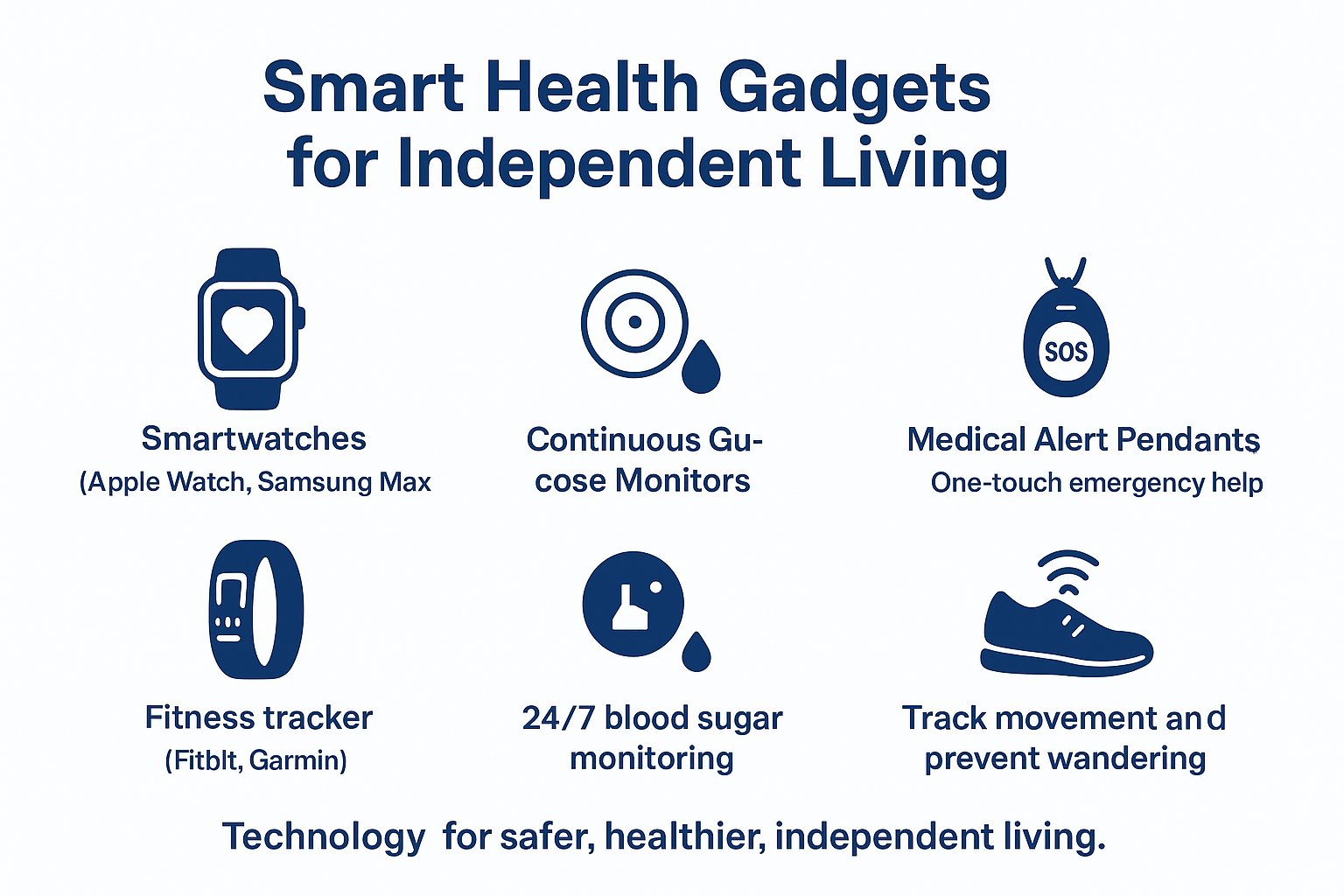
Wearable technology for the elderly includes many smart and easy-to-use devices designed for safety and health monitoring.
- Smartwatches: Apple Watch and Samsung Galaxy Watch track activity and alert help in emergencies.
- Medical Alert Pendants: Life Alert or Bay Alarm Medical call for help with one button and have GPS.
- Fitness Trackers: Fitbit or Garmin track steps, sleep, and heart rate. Thus, seniors stay active.
- Smart Shoes and Bands: GPS tracks dementia patients who wander.
- Continuous Glucose Monitors: Track blood sugar automatically.
Real-Life Example
For instance, Mary, age 72, relies on a smartwatch with fall detection. One evening, she slipped in her kitchen. The watch quickly sent an alert to her daughter’s phone and to emergency services. Consequently, Mary received timely help, demonstrating how wearable technology can truly be life-saving. Despite such benefits, there are still challenges to consider.
Challenges and Considerations
However, there are still challenges to consider:
- Ease of Use: Devices must be simple, with large displays and voice prompts.
- Battery Life: Long-lasting batteries are important because frequent charging can be inconvenient.
- Affordability: Cost can be a barrier especially for fixed-income retirees.
- Privacy: Clear data protection policies are crucial so that seniors and families trust the technology.
Future of Wearable Technology for Seniors
Looking ahead, the future of wearable technology for seniors holds even more promise.
- AI-driven fall prediction (detecting risks before they happen).
- New wearables will monitor hydration and nutrition.
- Seamless integration with telehealth platforms.
- Moreover, more stylish, comfortable designs seniors enjoy wearing.
Conclusion
In Conclusion, Wearable technology for the elderly is not just about gadgets — it’s about dignity, safety, and independence. Ultimately these devices empower seniors to live healthier, freer lives while giving families peace of mind. If you’re considering wearable technology, here’s how to get started.
👉 If you have elderly loved ones, consider starting with a simple smartwatch or medical alert pendant. After all, It can provide crucial support when every moment is important.
FAQs
Q1. What is wearable technology for the elderly?
A. It includes smartwatches, pendants, and trackers that monitor health, detect emergencies, and improve safety for seniors.
Q2. How does wearable technology help elderly people?
A. It provides health monitoring, fall detection, medication reminders, and GPS tracking for safety and independence.
Q3. Which wearable devices are best for seniors?
A. Popular choices include Apple Watch, Fitbit, Life Alert pendants, and continuous glucose monitors for diabetic patients.
Q4. Are wearable devices easy for seniors to use?
A. Yes, many are designed with simple screens, large icons, and voice assistance to make them senior-friendly.
Q5. What is the future of wearables for the elderly?
A. The future includes AI-based fall prevention, non-invasive health checks, and integration with telemedicine.

2 Comments on “Wearable Technology for the Elderly People”