Mental Health Apps for Anxiety often become a quiet lifeline for people who seem to be coping on the outside—yet feel overwhelmed inside. In many cases, anxiety doesn’t arrive as panic. Instead, it shows up as sleepless nights, racing thoughts during simple decisions, or a constant sense of unease that’s difficult to explain.
When access to therapy feels out of reach—whether because of cost, long waiting lists, or fear of being judged—many people therefore turn to their phone, often late at night, hoping for relief they can access instantly and privately. For example, a guided breathing exercise, a calming voice, or a short grounding session can offer a moment of control when everything else feels uncertain.
However, an important question still remains:
Do mental health apps for anxiety truly help people heal, or do they mainly provide temporary comfort during moments of distress?
According to medical research, the answer is realistic but hopeful. These apps can help—when they are used appropriately, for the right level of anxiety, and with clear, realistic expectations.
What Are Online Mental Health Apps?
Contents
- 1 What Are Online Mental Health Apps?
- 2 Do Online Mental Health Apps Help With Anxiety According to Medical Research?
- 3 How Mental Health Apps Reduce Anxiety (Clinical Explanation)
- 4 ALSO READ
- 5 Clinical Evidence Supporting Anxiety Apps
- 6 Real-World Clinical Pattern (Observed Outcomes)
- 7 Benefits of Online Mental Health Apps for Anxiety
- 8 Medical Limitations You Must Understand
- 9 Who Should Use Anxiety Apps? (Clinician-Guided Use)
- 10 Are Online Mental Health Apps Safe?
- 11 ALSO READ
- 12 Conclusion
- 13 FAQs
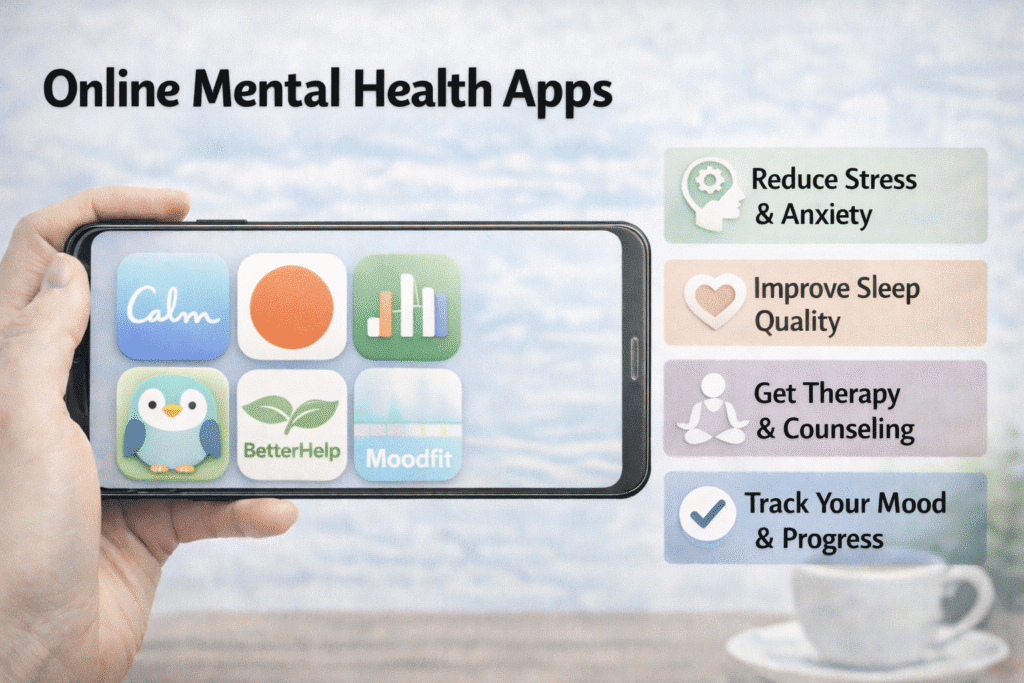
Online mental health apps are digital self-care and therapeutic tools designed to support emotional regulation and anxiety management using evidence-based psychological methods.
Clinically credible apps typically include:
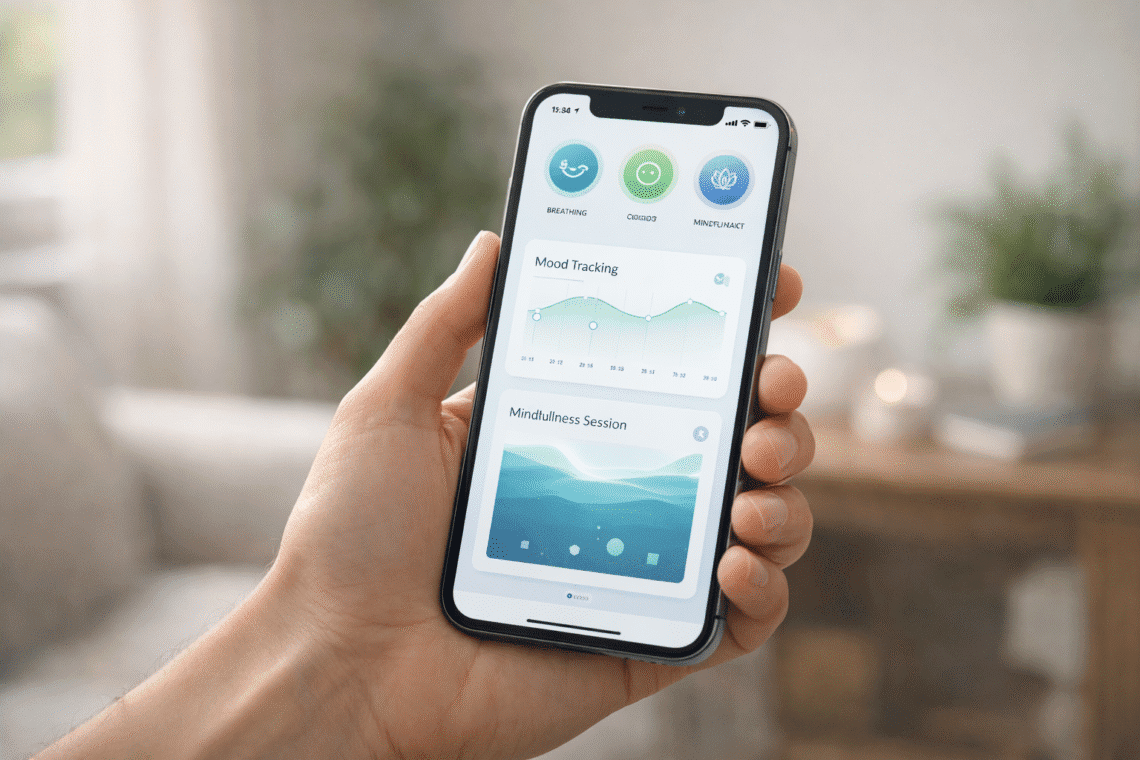
- Guided breathing and relaxation techniques
- Mindfulness-based stress reduction programs
- Cognitive Behavioral Therapy (CBT)–based exercises
- Mood, anxiety, and stress tracking
- Psychoeducation developed with mental health professionals
- Optional access to online coaching or counseling
Importantly, healthcare systems increasingly classify these tools as early interventions or supportive care, not replacements for psychotherapy or psychiatric treatment.
Do Online Mental Health Apps Help With Anxiety According to Medical Research?
Yes—especially for mild to moderate anxiety.
Global health authorities, including the World Health Organization, recognize digital mental health interventions as effective tools for reducing anxiety and stress, particularly where access to in-person care is limited.
Similarly, the National Institute of Mental Health confirms that CBT-based interventions—commonly used in anxiety apps—are among the most effective, research-supported treatments for anxiety disorders.
The key factor is appropriate use, not blind reliance.
How Mental Health Apps Reduce Anxiety (Clinical Explanation)
1. Nervous System Regulation
Anxiety is closely linked to overactivation of the sympathetic nervous system (the body’s “fight-or-flight” response).
Guided breathing, progressive relaxation, and mindfulness exercises stimulate the parasympathetic nervous system, which helps:
- Lower heart rate
- Reduce muscle tension
- Decrease stress hormone release
Clinical psychology research referenced by the American Psychological Association shows that regular controlled breathing improves emotional regulation and reduces anxiety symptoms over time.
2. Cognitive Behavioral Therapy (CBT) Techniques
CBT focuses on identifying and restructuring unhelpful thought patterns that maintain anxiety.
Many high-quality apps adapt core CBT components, such as:
- Thought monitoring
- Cognitive restructuring
- Behavioral activation
- Gradual exposure planning
The American Psychological Association recognizes CBT as a gold-standard treatment for anxiety disorders. Digital formats work best when exercises are brief, structured, and practiced consistently.
ALSO READ
Mindfulness Based Cognitive Therapy: A Practical Guide to Calmness
3. Consistency and Habit Formation
From a clinical perspective, frequency matters more than intensity.
Short daily sessions (5–15 minutes) help users:
- Build emotional awareness
- Reduce avoidance behaviors
- Develop long-term stress management habits
Consistency is one of the strongest predictors of symptom improvement in anxiety care.
Clinical Evidence Supporting Anxiety Apps
Multiple peer-reviewed studies support the clinical value of evidence-based mental health apps:
- A randomized controlled trial published in The Lancet Digital Health (2020) found that app-based CBT reduced anxiety symptoms by 30–40% over 6–8 weeks in adults with mild to moderate anxiety.
- Harvard Health Publishing reports that mindfulness-based apps improve stress management, sleep quality, and emotional balance.
- The National Health Service recommends approved mental health apps as supportive tools, particularly while individuals wait for therapy.
These findings indicate that digital mental health tools can provide measurable clinical benefit when grounded in evidence.
Real-World Clinical Pattern (Observed Outcomes)
In digital health programs and clinical reviews, individuals with work-related or situational anxiety often report meaningful improvements when using CBT-based or mindfulness apps consistently.
Commonly observed outcomes within 3–4 weeks include:
- Improved sleep quality
- Reduced physical tension
- Better stress tolerance during daily tasks
These patterns align with findings highlighted by Harvard Medical School, which notes that even digitally delivered mindfulness practices can significantly reduce anxiety symptoms when practiced regularly.
Benefits of Online Mental Health Apps for Anxiety
From a healthcare perspective, these apps offer:
- Accessible, evidence-based support
- Lower cost compared to traditional therapy
- Privacy and reduced stigma
- Structured tools while awaiting professional care
- Guided self-management strategies
For many individuals, mental health apps function as a bridge to care, not a destination.
Medical Limitations You Must Understand
Mental health apps are support tools—not complete treatments.
They are not sufficient on their own for:
- Severe anxiety disorders
- Frequent or disabling panic attacks
- Trauma-related or PTSD-related anxiety
- Suicidal thoughts or self-harm risk
In these cases, psychiatrists and psychologists strongly recommend in-person or telehealth evaluation.
Who Should Use Anxiety Apps? (Clinician-Guided Use)
Mental health apps are most appropriate for people who:
- Experience mild to moderate anxiety
- Want early or preventive intervention
- Prefer private, self-guided support
- Need daily stress-management structure
Many clinicians recommend them as part of a stepped-care approach, where treatment intensity increases if symptoms persist.
Are Online Mental Health Apps Safe?
Reputable mental health apps typically:
- Follow established clinical frameworks
- Involve licensed mental health professionals
- Provide transparent medical disclaimers
- Protect user data and privacy
Users should avoid apps that promise instant results or claim to “cure” anxiety.
ALSO READ
Why is Mental Health Important: A Simple, Clear, Guide
Conclusion
So—do online mental health apps help with anxiety?
Yes. Medical research, global health organizations, and clinical psychology evidence support their use for mild to moderate anxiety.
They are not a cure.
They are not a replacement for therapy.
But when used correctly, they can be a safe, accessible, and clinically meaningful starting point toward better mental health.
Your mental health deserves evidence-based care—wherever that journey begins.
FAQs
Q1. Do doctors recommend mental health apps for anxiety?
Yes. Many clinicians recommend them as early support for mild to moderate anxiety.
Q2. Are anxiety apps clinically proven?
CBT-based and mindfulness apps are supported by peer-reviewed research and international health organizations.
Q3. Can anxiety apps be used alongside therapy?
Yes. They are often most effective when combined with professional care.
Q4. How often should I use an anxiety app?
Most experts recommend daily use for 5–15 minutes.
Q5. When should I seek professional help instead of relying on apps?
If anxiety worsens, includes panic attacks, or involves suicidal thoughts, seek professional care immediately.