Morning journaling is more than just writing words on paper.
It is a science-backed habit that helps your brain release stress, organize thoughts, and start the day with clarity.
Mental health experts and psychologists agree that expressive writing supports emotional balance and stress reduction.
What Is Morning Journaling? (Simple Explanation)
Contents
- 1 What Is Morning Journaling? (Simple Explanation)
- 2 How Morning Journaling Improves Mental Health
- 3 How Long Should You Journal Each Morning?
- 4 Simple Morning Journaling Prompts for Mental Health
- 5 ALSO READ
- 6 🌞 Real-Life Example (Relatable)
- 7 ✅ Why Morning Journaling Works So Well
- 8 Morning Journaling vs. Night Journaling
- 9 🧡 Final Thoughts: Start Small, Start Tomorrow
- 10 ❓ FAQs – Morning Journaling & Mental Health
Morning journaling means writing your thoughts, feelings, or goals shortly after waking up.
According to the American Psychological Association, writing about emotions can reduce stress and improve mental well-being.
This mental health journaling habit works because it allows your brain to unload stress early, instead of carrying it all day.

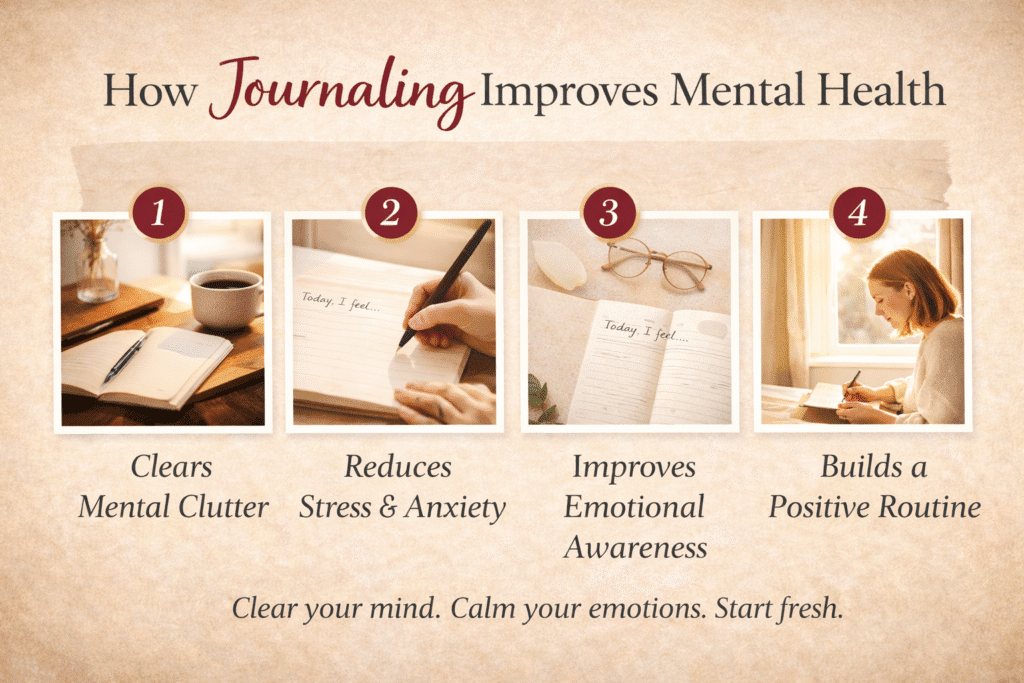
How Morning Journaling Improves Mental Health
1️⃣ Clears Mental Clutter
First of all, writing in the morning empties racing thoughts.
Instead of overthinking, you gain mental clarity.
Think of it like clearing browser tabs before starting work.
2️⃣ Reduces Stress and Anxiety
Morning journaling for mental health helps you name your worries.
Once worries are written down, they feel less powerful.
According to mental health experts, expressing emotions on paper can lower stress levels and improve emotional control.
3️⃣ Improves Emotional Awareness
When you journal daily, you start noticing patterns.
For example, you may realize what triggers stress or improves your mood.
As a result, you respond better to emotions instead of reacting.
4️⃣ Builds a Positive Morning Routine
A peaceful morning means a peaceful day.
Even 5 minutes of writing can shift your mindset.
How Long Should You Journal Each Morning?
You do not need much time.
✔ 5 minutes is enough
✔ Write 3–5 sentences
✔ Use simple words
✔ Be honest, not perfect
Consistency matters more than length.
Simple Morning Journaling Prompts for Mental Health
If you don’t know what to write, try these:
- How do I feel right now?
- What is one thing I am grateful for today?
- What is worrying me?
- What do I need emotionally today?
- One intention for today is…
These prompts support emotional wellness and mental clarity.
ALSO READ
Why is Mental Health Important: A Simple, Clear, Guide
🌞 Real-Life Example (Relatable)
Many people who struggle with anxiety say mornings feel rushed and overwhelming.
However, those who practice morning journaling often report feeling more in control and emotionally steady throughout the day.
Small habit. Big mental shift.
✅ Why Morning Journaling Works So Well
Because it happens before stress begins.
Because it gives your mind a safe place to speak.
And because mental health improves when thoughts are acknowledged, not ignored.
Morning Journaling vs. Night Journaling
Both are helpful, but morning journaling has unique benefits.
| Morning Journaling | Night Journaling |
|---|---|
| Clears the mind | Reflects on the day |
| Sets intention | Releases the day |
| Improves focus | Improves sleep |
Ideally, choose what fits your lifestyle best.
🧡 Final Thoughts: Start Small, Start Tomorrow
Morning journaling can improve your mental health without pressure or cost.
You only need a notebook and a few quiet minutes.
Start tomorrow morning.
Your mind will thank you.
❓ FAQs – Morning Journaling & Mental Health
Q1. Is morning journaling good for mental health?
A. Yes. Morning journaling helps reduce stress, improve emotional awareness, and support mental clarity throughout the day.
Q2. How long should I do morning journaling?
A. Even 5 minutes daily is enough to experience mental health benefits.
Q3. What should I put in my morning journal??
A. Write your feelings, worries, gratitude, or intentions for the day.
Q4. Can morning journaling help with anxiety?
A. Yes. Writing thoughts early helps release anxious feelings before they build up.
Q5. Do I need to journal every day?
A. Consistency helps, but even a few days a week can improve mental well-being.

