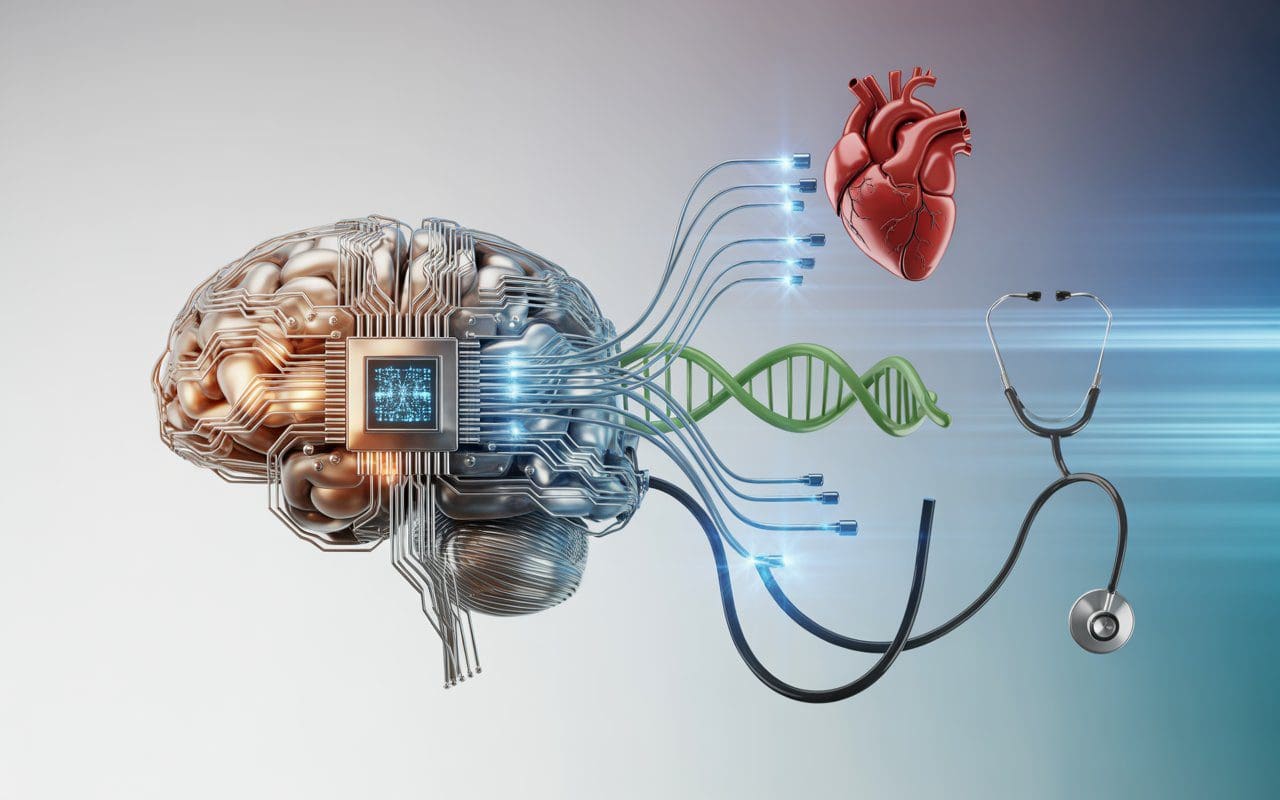
Machine learning in healthcare is changing the way doctors detect and treat diseases — even before symptoms appear.
Imagine doctors making faster, smarter decisions with AI tools that learn from millions of patient records every day.
This future is already here. Artificial intelligence in hospitals can quickly analyze X-rays, predict heart problems, and suggest personalized treatments. Moreover, these smart medical technologies improve accuracy and reduce mistakes.
As technology grows, predictive healthcare helps doctors identify risks early, leading to better results and lower costs. As a result, patients get care that is faster, safer, and more personalized.
This combination of data-driven diagnosis and human expertise is transforming healthcare worldwide. In addition, it is shaping a future where medicine is proactive, and every decision is guided by smart, evidence-based insights.
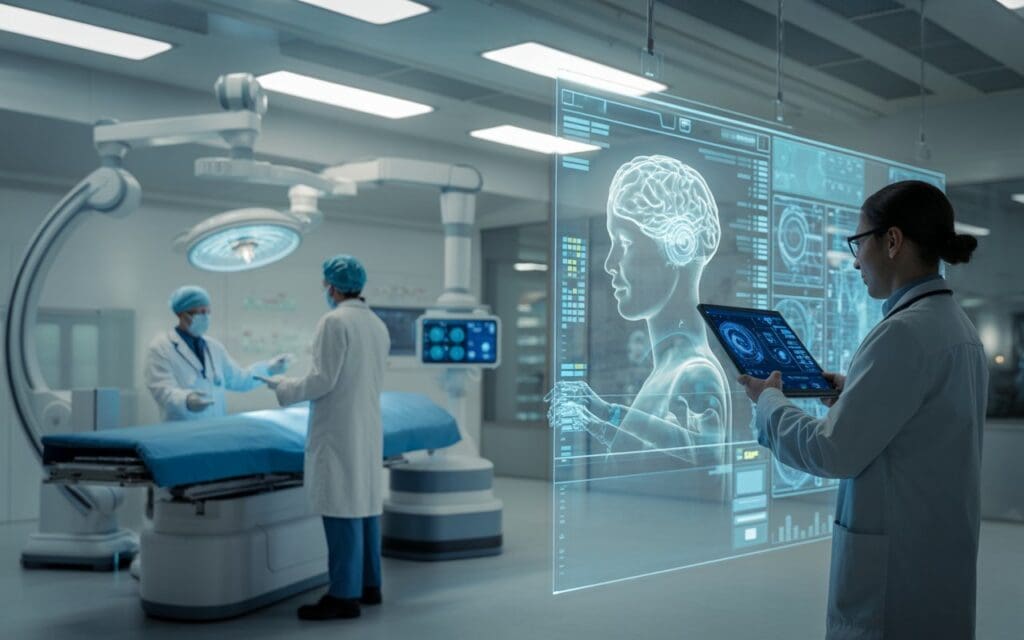
🧠 What Is Machine Learning in Healthcare?
Contents
- 1 🧠 What Is Machine Learning in Healthcare?
- 2 💡 Key Benefits of Machine Learning in Health Care Integration
- 3 1. Early Disease Detection
- 4 2. Personalized Treatment Plans Using Machine Learning in Healthcare
- 5 3. Faster and More Accurate Diagnosis with Machine Learning in Healthcare
- 6 4. Faster and More Accurate Diagnosis with Machine Learning in Healthcare
- 7 5. Drug Discovery and Research with Machine Learning in Healthcare
- 8 🩻 Real-Life Example: AI in Radiology
- 9 ALSO READ
- 10 Wearable Technology for the Elderly People
- 11 ⚖️ Challenges and Ethical Considerations in Smart Medical technology
- 12 🚀 The Future of Predictive Healthcare and AI in Hospitals
- 13 ❤️ Conclusion
- 14 ❓ FAQs: Machine Learning in Healthcare
Machine learning allows computers to “learn” from medical data — such as X-rays, lab reports, and patient histories — and make predictions or recommendations.
Unlike traditional software, ML models improve automatically as they process more data.
For example:
- Google DeepMind detects over 50 eye diseases with expert-level precision.
- IBM Watson Health analyzes cancer data to suggest the most effective treatments.
As a result, machine learning in health care together are shaping a smarter, more efficient medical ecosystem.
💡 Key Benefits of Machine Learning in Health Care Integration
1. Early Disease Detection
Machine learning can detect health issues before symptoms appear.
- For instance, it can analyze scans, lab tests, and wearable data.
- Consequently, doctors can spot cancer, heart disease, or diabetes at an early stage.
- Therefore, patients have better chances of recovery and improved outcomes.
A 2024 WHO report found that AI-assisted screening reduced diagnostic errors by up to 30% in pilot hospitals.
2. Personalized Treatment Plans Using Machine Learning in Healthcare
Every patient is unique. AI uses genetic, lifestyle, and health history data to create tailored treatment plans.
- Moreover, it reduces side effects.
- In addition, recovery rates improve.
- As a result, care becomes more precise and effective.
3. Faster and More Accurate Diagnosis with Machine Learning in Healthcare
AI tools can review thousands of medical images within seconds.
- Therefore, radiologists can identify fractures or tumors quickly.
- Moreover, human error is minimized.
- Consequently, treatment decisions are faster and more confident.
4. Faster and More Accurate Diagnosis with Machine Learning in Healthcare
Hospitals are using predictive healthcare tools to monitor patients in real time.
- For instance, they can anticipate complications before they happen.
- As a result, hospital readmissions are reduced.
- In addition, overall patient safety improves.
5. Drug Discovery and Research with Machine Learning in Healthcare
In the past, new drug development took years. Now, machine learning in healthcare research can analyze chemical compounds and predict which might work best — speeding up innovation and reducing costs.
🩻 Real-Life Example: AI in Radiology
🩻 Real-Life Example: AI in Radiology and Data-Driven Diagnosis
A recent study in The Lancet Digital Health found that AI matched expert radiologists in detecting breast cancer from mammograms.
In some cases, it even identified cancers that humans missed.
Therefore, this partnership between doctors and AI is not replacing expertise — it’s enhancing it through data-driven diagnosis and accuracy.
“AI will not replace doctors,” says Dr. Eric Topol, author of Deep Medicine, “but doctors who use AI will replace those who do not.”
ALSO READ
Wearable Technology for the Elderly People
⚖️ Challenges and Ethical Considerations in Smart Medical technology
While machine learning offers incredible promise, it also raises important concerns:
- Data Privacy: Protecting sensitive medical data is critical.
- Bias and Fairness: AI models must represent diverse populations to avoid unequal outcomes.
- Transparency: Patients and doctors should understand how AI decisions are made.
However, with strong ethical guidelines, data security laws, and human oversight, the balance between innovation and trust can be achieved.
🚀 The Future of Predictive Healthcare and AI in Hospitals
The next decade of machine learning and health care will redefine medicine.
We can expect:
- Smart hospitals using real-time analytics.
- Virtual health assistants guiding patients.
- Predictive tools that stop diseases before they spread.
Furthermore, AI-driven predictive healthcare will make treatments more affordable and accessible. As technology advances, medicine will become more preventive, precise, and personal.
❤️ Conclusion
In conclusion, machine learning and health care are revolutionizing the medical world.
From faster diagnosis to predictive treatments, this fusion of human intelligence and machine precision is saving time — and lives.
As we move forward, embracing AI in medicine responsibly will lead us toward a healthier, smarter, and more compassionate future.
❓ FAQs: Machine Learning in Healthcare
Q1. How is machine learning used in hospitals?
Hospitals use ML for patient monitoring, early risk detection, and analyzing scans for faster diagnosis.
Q2. Can AI replace doctors in the future?
No. AI supports doctors by reducing workload and improving accuracy — but human judgment and empathy are irreplaceable.
Q3. Is patient data safe in machine learning systems?
Yes, when protected by encryption and privacy laws like HIPAA and GDPR, data remains secure.
Q4. What are examples of AI in healthcare today?
Chatbots for mental health, predictive tools for heart disease, and cancer-detecting imaging systems.
Q5. What is the biggest advantage of machine learning in healthcare?
Its ability to analyze vast medical data quickly — helping doctors make better, faster, and more personalized decisions.