Last Updated: March 2026
Best breakfast options for weight loss can either support your progress — or quietly sabotage it. Despite common myths, there’s no magical “fat-burning breakfast.” But research consistently shows that the right morning meal can improve appetite control, stabilize energy levels, and reduce overeating later in the day.
In clinical and real-world settings, one pattern shows up repeatedly: people who eat balanced, protein-rich breakfasts tend to experience fewer cravings, better portion control, and more consistent fat loss over time.
This guide breaks down evidence-based breakfast strategies, practical meal ideas, and simple frameworks you can apply immediately.
Why Breakfast Can Matter for Weight Loss
Contents
- 0.1 Why Breakfast Can Matter for Weight Loss
- 0.2 ALSO READ
- 0.3 What Makes a Breakfast “Weight Loss Friendly”?
- 0.4 🧩 The PPF Method (Protein + Produce + Fibre)
- 0.5 6 Best Breakfast Options for Weight Loss
- 0.6 1. Eggs (High Protein, High Satiety)
- 0.7 2. Greek Yogurt (Protein + Gut Support)
- 0.8 3. Oatmeal (Fibre-Rich, Slow Digesting)
- 0.9 4. Protein Smoothies (Fast & Effective When Done Right)
- 0.10 5. Chia Seed Pudding (High Fibre + Prep-Friendly)
- 0.11 6. Avocado Toast (Balanced When Built Properly)
- 0.12 What to Avoid at Breakfast
- 0.13 When Should You Eat Breakfast?
- 0.14 Practical Strategies That Actually Work
- 0.15 Who This Approach Works Best For
- 0.16 Conclusion
- 0.17 Frequently Asked Questions
- 1 Sources & References
Breakfast is not essential for everyone — and approaches like intermittent fasting can work well for some individuals.
However, research suggests that for many people, a well-structured breakfast may:
- Help regulate hunger hormones like ghrelin
- Reduce mid-morning cravings
- Improve portion control at later meals
- Support overall diet quality
A randomized study published in Obesity found that higher-protein breakfasts significantly reduced hunger and late-night snacking, especially compared to lower-protein meals.
👉 Key takeaway:
It’s not about whether you eat breakfast — it’s about what and how you eat.
ALSO READ
7 Simple Diet Changes That Lead to Weight Loss
What Makes a Breakfast “Weight Loss Friendly”?
Instead of focusing only on calories, effective weight-loss breakfasts share three key characteristics:
1. Protein (20–30g)
- Increases satiety hormones
- Reduces hunger later in the day
- Helps preserve lean muscle mass
2. Fibre (5–10g+)
- Slows digestion
- Stabilizes blood sugar
- Promotes fullness
3. Healthy Fats
- Improve satiety
- Support sustained energy
🧩 The PPF Method (Protein + Produce + Fibre)
A simple, science-backed framework you can use daily:
- Protein: Eggs, yogurt, protein powder
- Produce: Fruits or vegetables
- Fibre: Oats, seeds, whole grains
👉 In practice, people who follow this structure tend to:
- Snack less
- Experience fewer energy crashes
- Maintain a calorie deficit more easily
6 Best Breakfast Options for Weight Loss
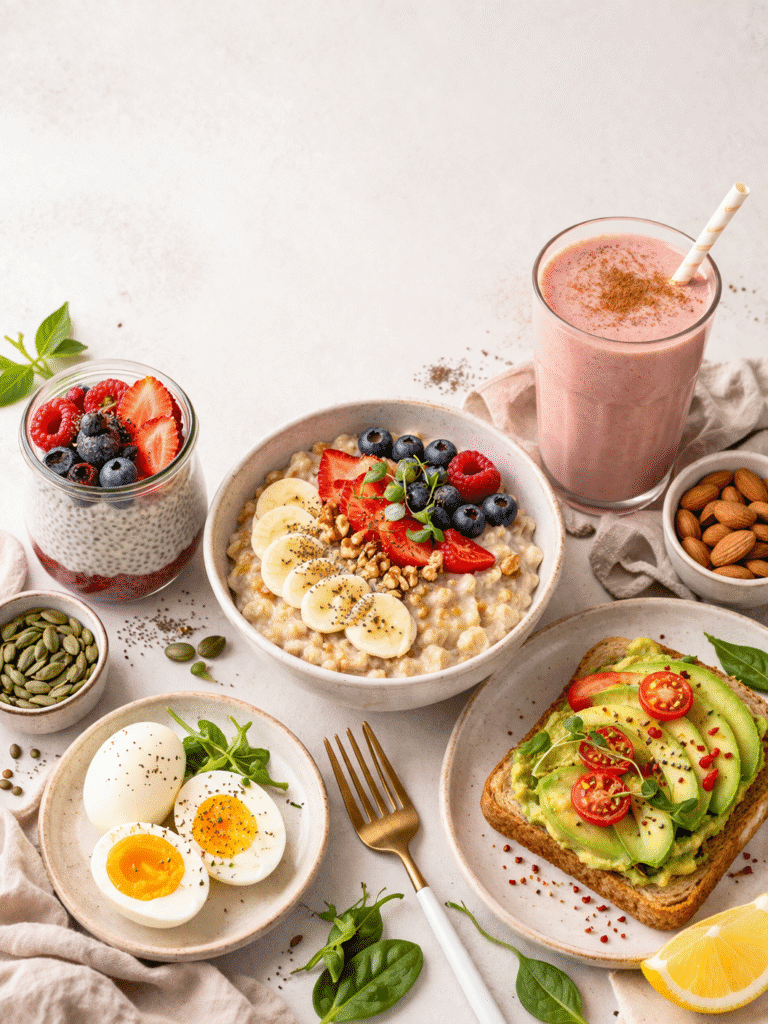
1. Eggs (High Protein, High Satiety)
Eggs are one of the most effective breakfast foods for appetite control.
- ~12–13g protein per 2 eggs
- Rich in essential nutrients
- Strong satiety effect shown in multiple studies
Best ways to eat:
- Scrambled eggs with spinach and tomatoes
- Vegetable omelette with a small amount of cheese
👉 Real-world insight: Replacing toast-heavy breakfasts with eggs often reduces hunger within 3–5 days.
2. Greek Yogurt (Protein + Gut Support)
Plain Greek yogurt is a powerful, convenient option:
- 15–20g protein per serving
- Contains probiotics
- Quick and portable
Emerging research suggests gut health may influence weight regulation, although this field is still evolving.
Best combination:
- Greek yogurt + berries + chia seeds or nuts
Avoid: Flavored versions with added sugar
3. Oatmeal (Fibre-Rich, Slow Digesting)
Oats contain beta-glucan, a soluble fibre shown to:
- Slow gastric emptying
- Increase satiety
- Reduce overall calorie intake
Best choices:
- Rolled oats or steel-cut oats
Upgrade it:
- Add protein (Greek yogurt, protein powder, or eggs on the side)
👉 Common mistake: Eating plain oats alone often leads to faster hunger return.
4. Protein Smoothies (Fast & Effective When Done Right)
Smoothies can either help or hurt weight loss — depending on how they’re built.
Many store-bought smoothies are:
- High in sugar
- Low in protein
→ Leading to increased hunger later
Balanced Smoothie Formula:
- Protein: Greek yogurt or protein powder
- Fibre: Spinach, flaxseed
- Fruit: Berries or half a banana
- Fat: Nut butter or avocado
- Liquid: Unsweetened milk or water
5. Chia Seed Pudding (High Fibre + Prep-Friendly)
Chia seeds are rich in:
- Fibre
- Omega-3 fatty acids
- Plant-based protein
They absorb liquid and expand, increasing fullness.
Simple recipe:
- 3 tbsp chia seeds + 1 cup milk
- Refrigerate overnight
Add:
- Fruit + nuts for balance
6. Avocado Toast (Balanced When Built Properly)
Avocado provides:
- Monounsaturated fats
- Fibre
- Strong satiety value
Make it weight-loss friendly:
- Use whole-grain bread
- Add protein (egg, cottage cheese, or salmon)
What to Avoid at Breakfast
Some foods increase hunger and lead to overeating later:
- Sugary cereals: Low satiety, high sugar spikes
- Pastries & white bread: Rapid digestion → hunger rebound
- Flavoured coffee drinks: Often 300–500+ calories
- Fruit juice: High sugar, low fibre
- Processed meats: High sodium and saturated fat
👉 Clinical pattern: High-sugar breakfasts are strongly linked to mid-morning crashes and increased snacking.
When Should You Eat Breakfast?
There is no universal rule.
If you eat breakfast:
- Within 1–2 hours of waking may help regulate appetite
If you skip breakfast (intermittent fasting):
- Focus on meal quality when breaking your fast
👉 Consistency matters more than timing.
Practical Strategies That Actually Work
- Prioritize protein first
- Avoid drinking calories (sweet coffees, juices)
- Keep meals simple and repeatable
- Eat mindfully (reduce distractions)
👉 People who simplify their breakfast routine are more likely to stay consistent long-term.
Who This Approach Works Best For
✔ Best for:
- People who struggle with cravings
- Those who overeat later in the day
- Busy individuals needing structured eating
❌ May not be necessary for:
- People successfully using intermittent fasting
- Those with naturally low morning appetite
Conclusion
There’s no single “perfect” breakfast for weight loss — but there are clear patterns that work.
Meals that are:
- High in protein
- Rich in fibre
- Low in added sugar
…consistently support better appetite control and sustainable fat loss.
Start small. Even upgrading one daily meal can create meaningful, long-term results.
Frequently Asked Questions
Q1. What’s the best quick breakfast for weight loss?
A protein smoothie or pre-made chia pudding are practical, time-saving options that support satiety and energy.
Q2. Is skipping breakfast bad for weight loss?
Not necessarily. Some people do well with intermittent fasting, while others experience increased hunger and overeating later. It depends on individual response.
Q3. How many calories should breakfast have?
There’s no fixed number, but many effective weight loss plans fall within 300–450 calories, depending on daily needs.
Q4. Can I eat fruit for breakfast?
Yes — but pairing fruit with protein (like yogurt or eggs) improves satiety and stabilizes blood sugar.
Q5. Is coffee okay for weight loss?
Yes, if consumed without excess sugar or cream. Black coffee or lightly milked options are generally fine.
Sources & References
About the Author
Written by a licensed physiotherapist with clinical experience in lifestyle management, rehabilitation, and metabolic health. Through working with patients managing weight, mobility issues, and chronic conditions, the focus is on practical, evidence-based strategies that are sustainable in real life
Disclaimer
This content is for informational purposes only and is not a substitute for professional medical advice. Consult a qualified healthcare provider or registered dietitian for personalized guidance.