Introduction
Contents
- 1 Introduction
- 2 What is Women Empowerment in Healthcare?
- 3 ALSO READ
- 4 Why Women Empowerment IS IMPORTANT IN HEALTHCARE
- 5 Role of Women in the Healthcare System Today
- 6 How Women Empowerment Improves Access to Healthcare
- 7 Empowering Women Within the Healthcare System
- 8 Real Clinical Insight
- 9 Key Benefits of Women Empowerment in Healthcare
- 10 Conclusion
- 11 Call to Action
- 12 FAQs
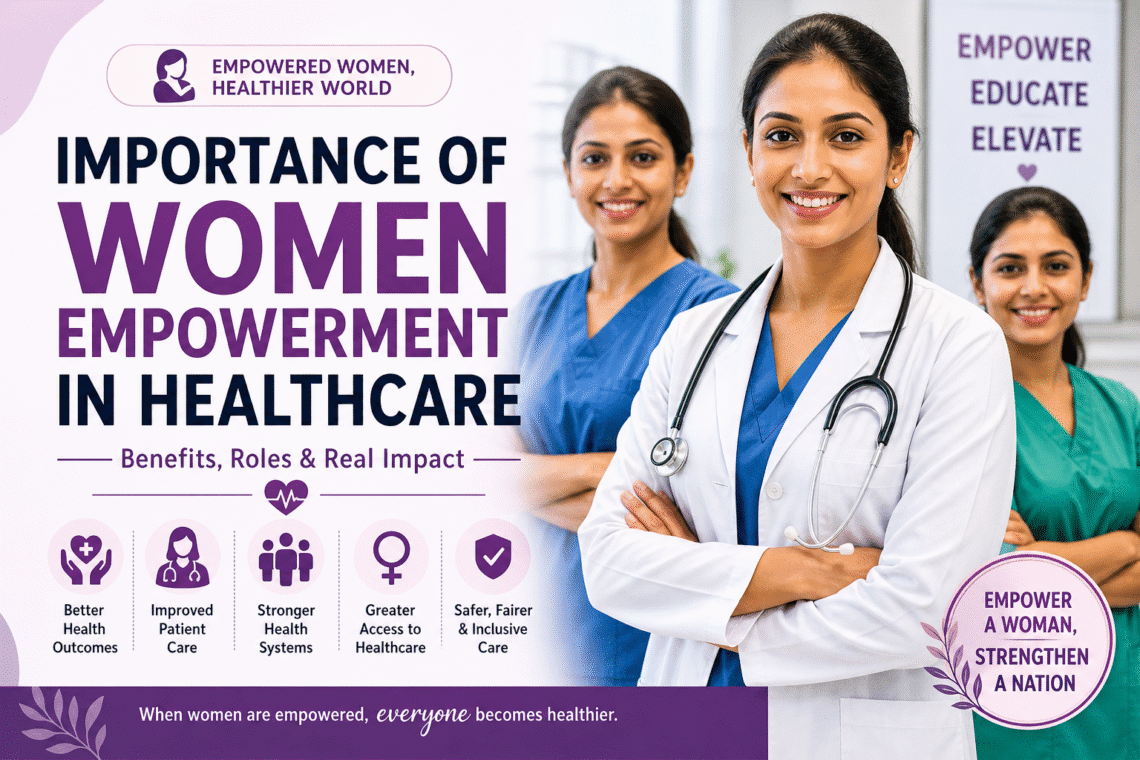
WHY WOMEN EMPOWERMENT IS IMPORTANT IN HEALTHCARE SYSTEMS?
In today’s world, after the talks, debates, seminars, and session all around the world about women’s empowerment, majority knows the importance women empowerment in the healthcare system.
However, some people are still think why women’s empowerment is important in the healthcare systems .
Here, is the simple reason because women empowerment play a vital role in critical areas like:
- directly affects patient outcomes,
- healthcare quality
- community well-being
When women gets education, earn respect, and actively involved in health decisions, they not only improve their own lives but also makes their families strong and strenghten the entire healthcare systems.
Women are already the backbone of healthcare as patients, caregivers, nurses and doctors.
So empowering women is one of the ways to build safer and more inclusive healthcare services that focus on the patient.
Women empowerment plays a role in the healthcare system and empowering women makes the healthcare system better.
What is Women Empowerment in Healthcare?
Women empowerment in healthcare refers to allowing women to:
- Make decisions about their health
- Access quality medical services without barriers
- Take part in healthcare leadership and policy-making
- Work in safe, respectful professional environments
As a result, empowered women contribute to better healthcare delivery and improved public health outcomes.
ALSO READ
What Is Women Empowerment? A Simple & Powerful Guide
Why Women Empowerment IS IMPORTANT IN HEALTHCARE
1. Better Health Decisions for Women and Families
Empowered women are more likely to take control of their health. For example, they:
- Ask questions about symptoms and treatments
- Seek preventive care such as screenings and vaccinations
- Reject harmful myths and choose evidence-based treatments
In addition, when women are informed, they become better caregivers. This leads to:
- Early disease detection in children
- Improved nutrition at home
- Stronger immunity within families
2. Improved Patient Outcomes with Women Healthcare Providers
Research shows that care provided by women professionals often leads to better outcomes. For instance:
- Lower hospital readmission rates
- Higher patient satisfaction
- Better communication and understanding
Furthermore, women providers tend to focus more on emotional and social aspects of care. As a result, patients feel heard, respected, and involved in decision-making.
3. Women Are the Backbone of the Healthcare Workforce
Globally, women make up nearly 67% of the health and care workforce, according to the World Health Organization (WHO).
However, despite this:
- Their work is often undervalued
- They are underpaid compared to male counterparts
- They have limited representation in leadership
Therefore, empowering women is essential not just for fairness, but also for improving healthcare systems overall.
Role of Women in the Healthcare System Today
4. Women in Leadership and Decision-Making
Although women dominate frontline roles, they hold only a small percentage of leadership positions.
When women are empowered into leadership roles:
- Healthcare becomes more patient-centered
- Maternal and mental health services improve
- Workplace safety and equality increase
In other words, representation leads to better policies and inclusive care.
5. Women Health Professionals and Patient-Centered Care
Women healthcare providers often adopt a more empathetic and collaborative approach.
For example, they:
- Communicate clearly with patients
- Encourage shared decision-making
- Build trust through active listening
This is especially important in sensitive areas like:
- Reproductive health
- Mental health
- Gender-based violence
- Pelvic health and physiotherapy
Consequently, patients are more likely to seek help and follow treatment plans.
6. Women-Centered Research and Medical Innovation
Historically, medical research has often overlooked women-specific health issues. However, empowering women in research is changing that.
Now, there is growing focus on:
- PCOS and hormonal disorders
- Endometriosis
- Maternal mental health
- Osteoporosis
As a result, treatment plans are becoming more accurate, personalized, and effective.
How Women Empowerment Improves Access to Healthcare
7. Breaking Social and Cultural Barriers
In many societies, women still face barriers such as:
- Limited mobility
- Social restrictions
- Stigma around discussing health issues
However, empowerment through education and awareness helps women:
- Seek care independently
- Speak openly about health concerns
- Support other women in their communities
Therefore, healthcare access improves significantly.
8. Safer Maternal and Reproductive Healthcare
Empowered women are more likely to:
- Attend antenatal and postnatal visits
- Choose skilled birth attendants
- Follow recovery and rehabilitation plans
In addition, they are more aware of:
- Birth planning
- Pain management options
- Postpartum physiotherapy
Due to this, complications such as postpartum hemorrhage and long-term pelvic issues are reduced.
Empowering Women Within the Healthcare System
9. Investing in Women Health Workers
Healthcare systems must actively support women by:
- Ensuring equal pay
- Providing safe work environments
- Offering leadership training and mentorship
Additionally, support systems like childcare and flexible schedules can significantly improve workforce retention.
10. Creating Gender-Sensitive Healthcare Services
Healthcare institutions can promote empowerment by:
- Hiring more women in women-focused departments
- Designing private and safe consultation spaces
- Training staff in gender-sensitive and trauma-informed care
Consequently, patients feel more respected, leading to better healthcare experiences.
Real Clinical Insight
As a Physiotherapist, I observed in clinical practice, many women delay seeking care for issues like antenatal care, postnatal care, pelvic pain, postpartum depression or postpartum weakness due to stigma or lack of awareness. However, when educated and supported, they actively participate in rehabilitation programs, leading to faster recovery and improved quality of life.
Key Benefits of Women Empowerment in Healthcare
- Better patient outcomes
- Improved maternal and child health
- Stronger healthcare systems
- Increased healthcare access
- More inclusive policies and services
Conclusion
The importance of women empowerment in healthcare cannot be overstated. It is not just about equality it is about creating a healthcare system that is safe, effective, inclusive, and compassionate.
When women are empowered:
- Women make better health decisions
- They improve family and community health
- And They strengthen healthcare systems
Call to Action
👉 If you are a healthcare professional, start today by:
- Educating women about their health
- Encouraging open communication
- Promoting respectful and inclusive care
Empowering women in healthcare doesn’t just benefit women—it creates a healthier future for everyone.
Written by a Doctor of Physical Therapy (DPT) with experience in rehabilitation, women’s health, and patient-centered care. Passionate about promoting awareness, preventive care, and evidence-based practice.
FAQs
Q1: Why advance women in healthcare?
A: It boosts service access, decisions, family health, and growth while closing gaps (WHO).
Q2: How does workforce equity help?
A: Equal roles cut burnout, elevate care, and strengthen systems.
Q3: Why prioritize reproductive access?
A: It enables planning, education, and risk reduction, fostering generational gains.
Q4: What career barriers exist?
A: Pay gaps, leadership limits, balance issues, bias—address via mentorship and policy.
Q5: How can you help?
A: Advocate opportunities, back initiatives, learn biases, support access policies.
Start now—build a healthier world.