
Simple, evidence‑guided neck stretches to ease stiffness, reduce discomfort, and improve mobility
Total time: 10 minutes
Level: Beginner‑friendly
Frequency: Daily or every other day for best results
Neck pain is one of the most common musculoskeletal complaints, especially among office workers and people who spend long hours on phones or computers. Managing neck pain effectively often depends on regular, gentle movement and posture awareness—not just quick fixes.
Evidence from physical‑therapy research suggests that combining stretching with other exercises (like postural correction and strengthening) can modestly reduce neck pain and improve range of motion over several weeks for many people with non‑specific neck discomfort. Whether your discomfort comes from poor posture, stress, or long screen hours, these physiotherapist‑informed stretches can help relieve tension and restore comfortable neck motion.
https://www.spine-health.com/treatment/physical-therapy/physical-therapy-neck-pain-relief
Why Neck Stretches Can Help
Contents
- 1 Why Neck Stretches Can Help
- 2 ALSO READ
- 3 5 Neck Stretches for Relief and Mobility
- 4 1. Chin Tuck
- 5 2. Lateral Neck Stretch
- 6 3. Cervical Rotation Stretch
- 7 4. Upper Trapezius Stretch
- 8 5. Neck Flexion and Extension (Gentle Range of Motion)
- 9 How Long Before You Notice a Difference?
- 10 Safety and When to Seek Help
- 11 Frequently Asked Questions
- 12 About the Author
- 13 Medical Disclaimer
Before starting, it helps to understand what these stretches aim to do.
Neck pain is commonly linked to:
- Forward head posture
- Tight or overworked muscles (especially upper trapezius and scalenes)
- Reduced joint mobility in the cervical spine
- Long periods of static sitting or looking down
Gentle stretching can help:
- Loosen over‑tight muscles
- Improve blood flow to the area
- Support better alignment when combined with posture work
- Reduce muscular tension and stiffness
These stretches are designed for non‑urgent, non‑specific neck pain (no trauma, neurological symptoms, or systemic illness). If you notice red‑flag symptoms (explained in the safety section), see a healthcare professional instead of relying on stretching alone.
https://pubmed.ncbi.nlm.nih.gov/22895940
ALSO READ
How to Relieve Neck & Shoulder Tension from Anxiety (7 Expert Ways)
5 Neck Stretches for Relief and Mobility
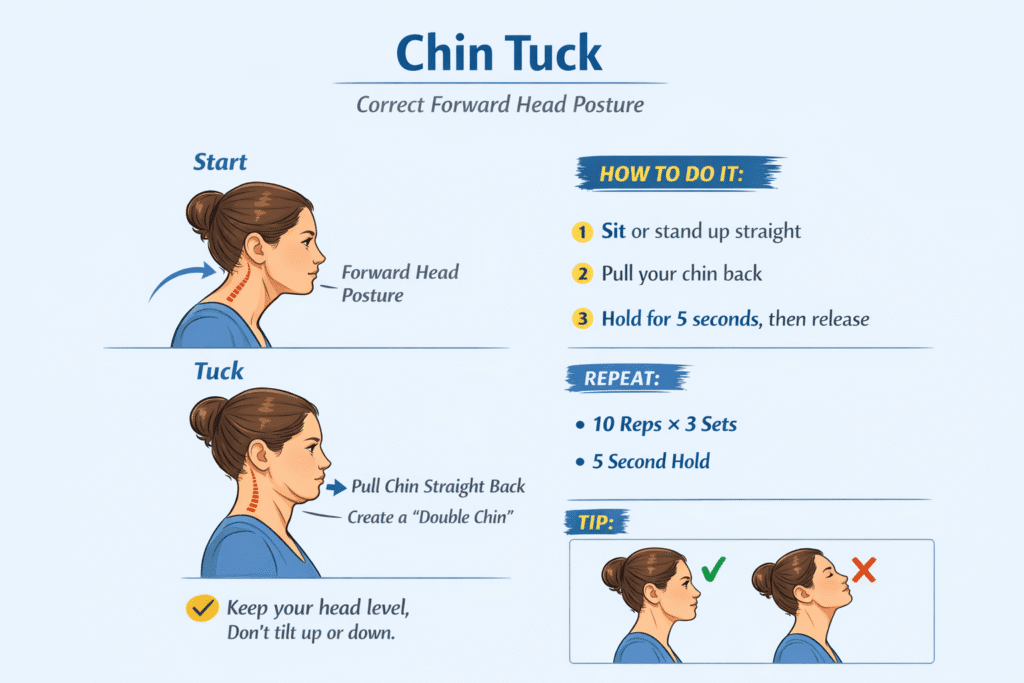
1. Chin Tuck
Targets: Deep cervical flexors, posture awareness
Forward head posture can strain the muscles and joints at the base of your skull. The chin tuck gently activates the deep neck flexors and helps bring your head slightly more in line over your shoulders.
How to do it:
- Sit or stand tall with shoulders relaxed.
- Gently glide your chin straight backward, creating a “double‑chin” feeling without tilting your head up or down.
- Hold for 3–5 seconds.
- Slowly release back to neutral.
Reps: 8–10 repetitions, 2–3 sets.
Tip: Keep your eyes level and avoid lifting or tucking your chin too forcefully. Think “small, controlled movements.”
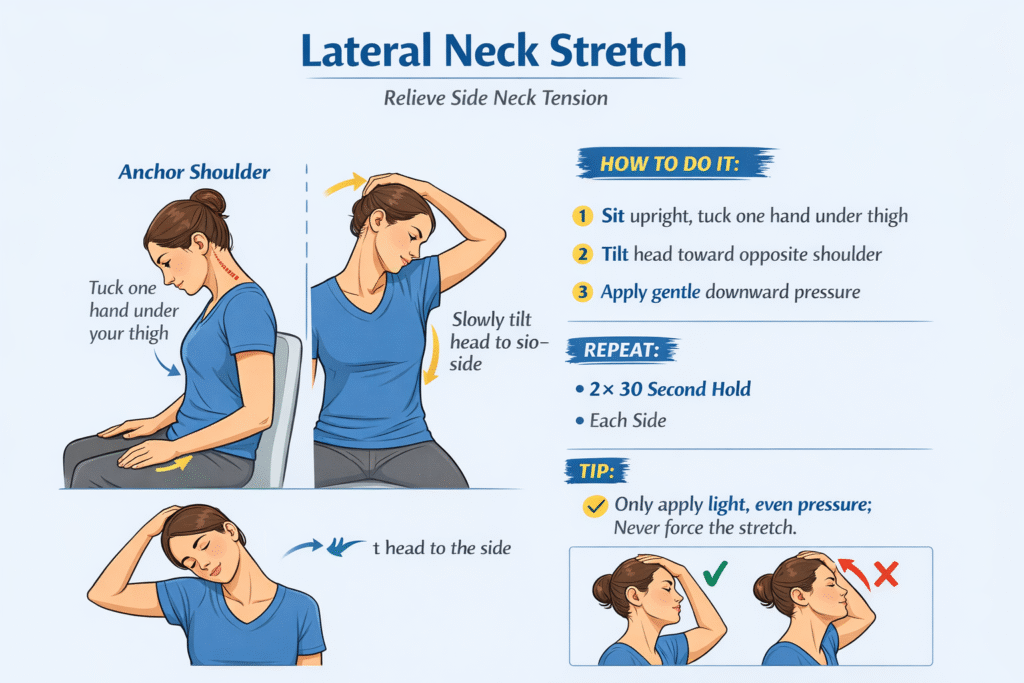
2. Lateral Neck Stretch
Targets: Upper trapezius, scalene muscles
This stretch addresses the common tight band of tension from the neck into the shoulder, often worsened by carrying bags on one side or awkward sleeping positions.
How to do it:
- Sit upright; place one hand under your opposite thigh to keep that shoulder down.
- Gently tilt your head toward the opposite side.
- For a slightly deeper stretch, use your free hand to apply light pressure at the side of your head (not the face or jaw).
- Hold for 20–30 seconds.
Reps: 2 sets per side.
Tip: Stretch only to a mild pull—not pain. If you feel sharp or radiating discomfort, ease off.
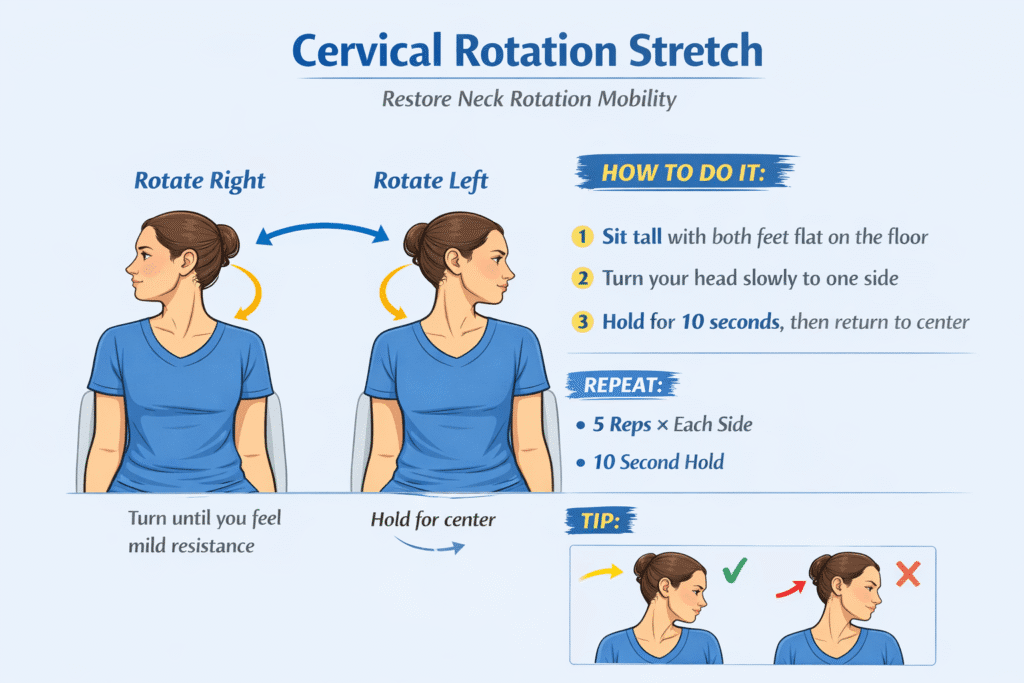
3. Cervical Rotation Stretch
Targets: Sternocleidomastoid, neck rotators
If you feel stiff when turning your head (for example, checking your blind spot), this exercise helps improve comfortable rotational range.
How to do it:
- Sit tall with feet flat on the floor and shoulders relaxed.
- Slowly turn your head to one side, keeping your chin level.
- Hold the end‑range position for 5–10 seconds where it feels like a gentle stretch.
- Return to center, then repeat on the other side.
Reps: 4–5 repetitions per side.
Tip: Move slowly, stay within a comfortable range, and avoid forcing your head beyond where tension turns into pain.
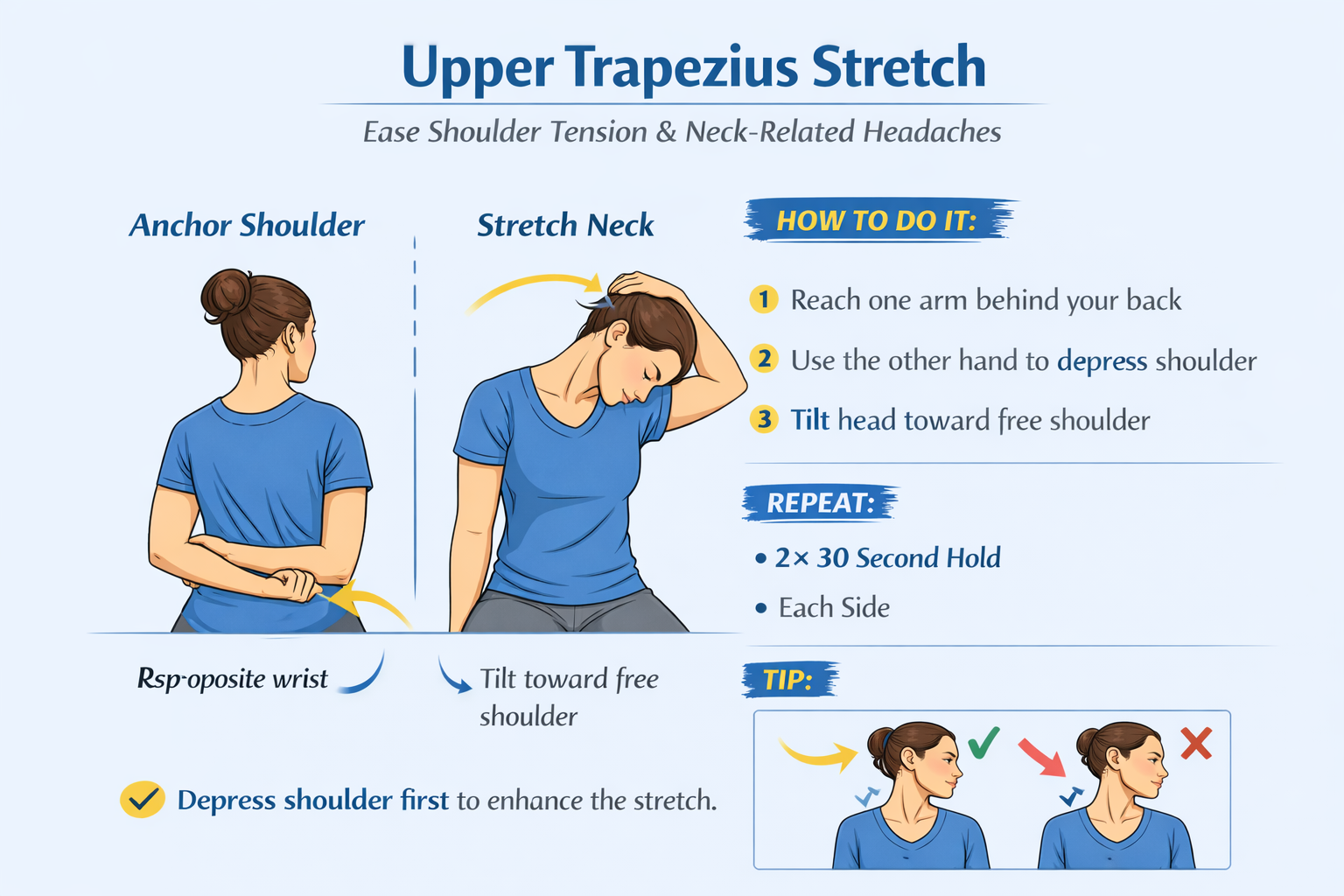
4. Upper Trapezius Stretch
Targets: Shoulder‑neck junction, muscles often linked with tension‑type headaches
A tight upper trapezius can contribute to discomfort at the base of the skull and cervicogenic (“neck‑related”) headaches. This version adds shoulder stabilization to deepen the stretch.
How to do it:
- Sit upright.
- Place one arm behind your back and gently pull it downward with the opposite hand.
- Tilt your head toward the opposite side, slightly forward, feeling a stretch along the upper shoulder‑neck line.
- Hold for 20–30 seconds.
Reps: 2 sets per side.
Tip: Keep breathing smoothly; forcing the stretch can increase muscle guarding instead of relaxing it.
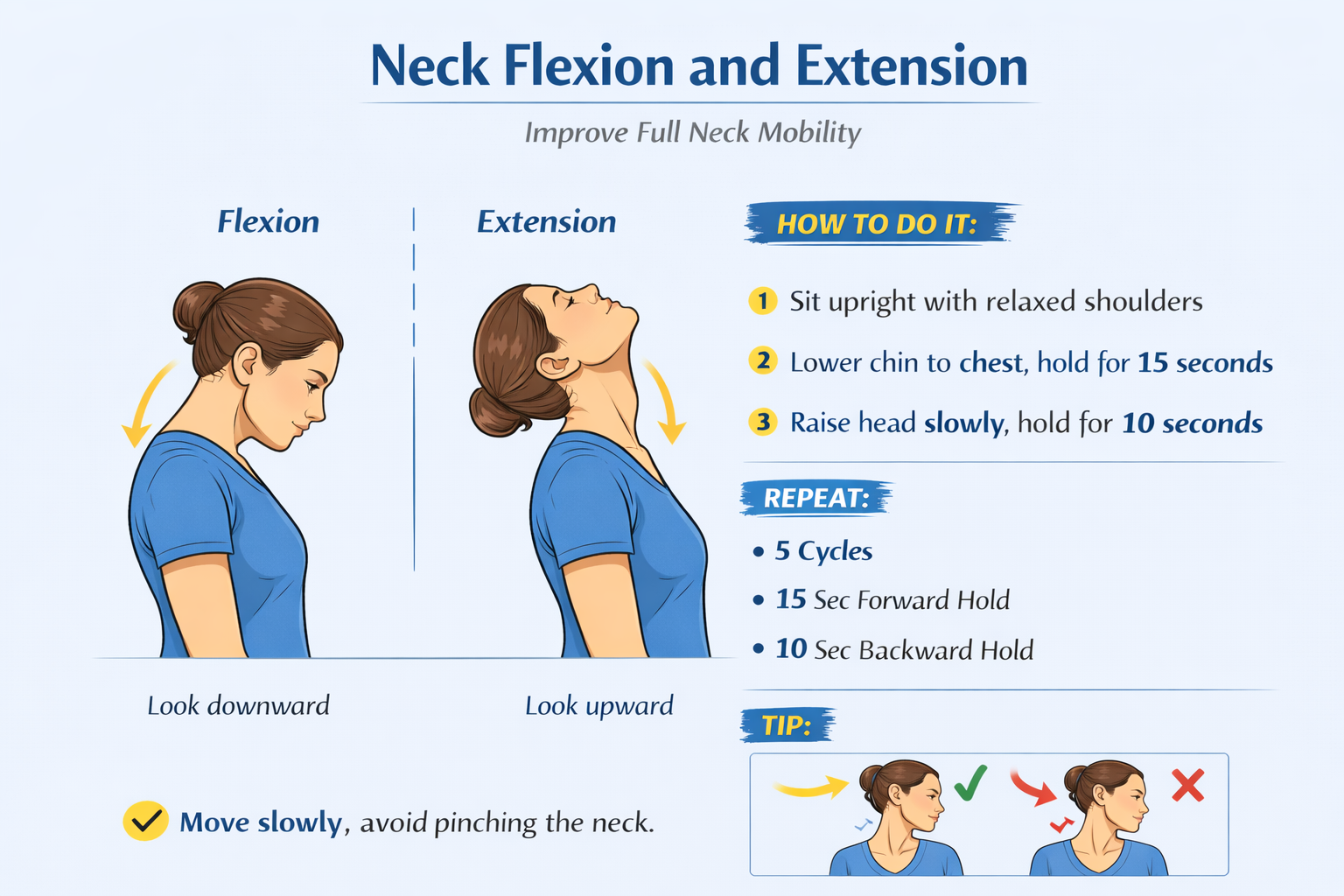
5. Neck Flexion and Extension (Gentle Range of Motion)
Targets: Front and back neck muscles
This gentle sequence helps restore fullness of motion after prolonged forward‑leaning postures (like sitting at a desk or looking at a phone).
How to do it:
- Sit upright with shoulders relaxed.
- Slowly lower your chin toward your chest, feeling a gentle stretch at the back of your neck.
- Hold for 10–15 seconds.
- Return to neutral, then very gently look upward (only as far as comfortable).
- Hold the upward position for 8–10 seconds.
Reps: 4–5 full cycles.
Tip: Move slowly and avoid pressing your chin or head into a painful position. If you feel compression or sharp pain, shorten the range.
How Long Before You Notice a Difference?
When done regularly, many people report:
- Milder stiffness within 1–2 weeks
- Slightly improved range of motion over several weeks
- Reduced discomfort over time, especially when combined with better posture and breaks from prolonged sitting
Consistency and gentle effort matter more than intensity; over‑stretching can worsen symptoms.
Safety and When to Seek Help
Stretching should feel like a mild pull, not sharp or radiating pain. Stop and adjust if you feel:
- Sudden or shooting pain in the neck or shoulder
- Numbness, tingling, or weakness in the arms or hands
- Dizziness, visual changes, or difficulty balancing
See a healthcare professional (doctor or physiotherapist) if:
- Neck pain lasts longer than 2–3 weeks despite home care
- Pain worsens or spreads down the arms
- You have a history of serious injury, cancer, or neurological disease
This routine is not a substitute for medical evaluation or treatment. Anyone with red‑flag symptoms (trauma, neurological changes, fever, or unexplained weight loss) should seek urgent medical care.
Frequently Asked Questions
1. How often should I do these stretches?
Most people benefit from doing them once daily, or sometimes twice daily if tolerated well. If you feel more sore than relieved, reduce frequency and ease into the routine more slowly.
2. Can neck stretches fix posture?
Stretches like the chin tuck and gentle alignment work can support better posture, but long‑term improvement usually also requires ergonomic changes (screen height, chair setup) and strength work. Posture is a habit, not a one‑time fix.
3. Is it normal to feel pain during stretching?
No. You may feel mild tension or fatigue, but sharp or worsening pain is a warning sign. Ease off, reduce range, or skip the exercise if it hurts.
4. When should I see a doctor or physiotherapist?
Get professional help if:
- Pain lasts beyond a few weeks
- You have numbness, tingling, or weakness
- Headaches or pain worsen with neck movement
- You have a history of serious medical conditions or trauma
A physiotherapist can tailor exercises to your specific pattern and progress you safely.
About the Author
This content is based on evidence‑informed physiotherapy practices and commonly recommended neck‑stretching exercises. It has been reviewed with reference to current clinical guidelines for mechanical and non‑specific neck pain. Always individualize any exercise program with professional guidance if symptoms are persistent or complex.
Medical Disclaimer
This article is for educational purposes only and does not replace personalized medical advice, diagnosis, or treatment. Always consult a qualified healthcare provider (doctor, physiotherapist, or other licensed professional) before starting or changing an exercise routine, especially if you have pre‑existing health conditions, persistent pain, or neurological symptoms.

