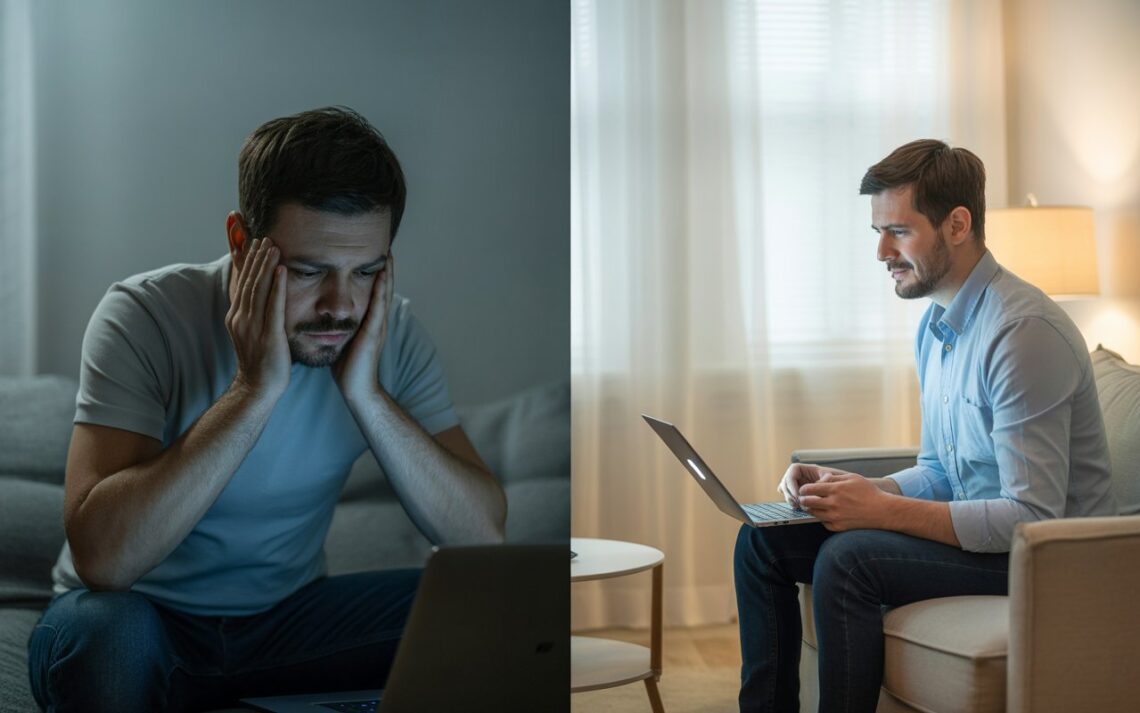
Telehealth is changing how people cope with anxiety, especially when even small daily tasks feel overwhelming.
For many people, getting help feels just as hard as the anxiety itself.
That is where telehealth is changing lives. It allows people with anxiety disorders to receive professional mental health care without leaving home.
For patients who fear clinics, crowds, or long waits, this approach can feel like a safe first step toward healing.
What Is Telehealth for Anxiety Disorders?
Contents
- 1 What Is Telehealth for Anxiety Disorders?
- 2 Which Anxiety Disorders Can Be Treated Through Telehealth?
- 3 ALSO READ
- 4 How Telehealth Therapy for Anxiety Works
- 5 Benefits of Telehealth for Anxiety Patients
- 6 Limitations and Safety Considerations
- 7 Is Telehealth Safe and Effective for Anxiety?
- 8 How to Choose the Right Telehealth Provider
- 9 Telehealth vs In-Person Therapy for Anxiety
- 10 Conclusion: Taking the First Step Toward Calm
- 11 FAQs: Telehealth for Anxiety Disorders
Telehealth means receiving health care through digital tools. This often includes video calls, phone sessions, or secure messaging with licensed providers.
For anxiety disorders, telehealth is commonly used for:
- Online therapy sessions
- Psychiatric evaluations
- Medication management
- Follow-up and progress check-ins
According to the American Psychological Association, online therapy can be just as effective as in-person care for many anxiety conditions.
Which Anxiety Disorders Can Be Treated Through Telehealth?
Telehealth works well for many common anxiety disorders, especially when symptoms are mild to moderate.
Conditions commonly treated online
- Generalized Anxiety Disorder (GAD)
- Panic Disorder
- Social Anxiety Disorder
- Phobias
- Health anxiety
In fact, the Centers for Disease Control and Prevention reports that anxiety disorders are among the most common mental health conditions, making remote care a critical solution.
ALSO READ
Is Anxiety a Disability? Legal, Medical, and Practical Insights
How Telehealth Therapy for Anxiety Works
The process is simple and patient-friendly.
Step-by-step experience
- You schedule an online appointment
- You meet a licensed therapist or psychiatrist via video
- Sessions follow a structured therapy plan
- Progress is tracked regularly
Most providers use cognitive behavioral therapy (CBT), which helps patients understand how thoughts affect emotions and behavior. This approach works especially well for anxiety when delivered through telehealth.
Benefits of Telehealth for Anxiety Patients
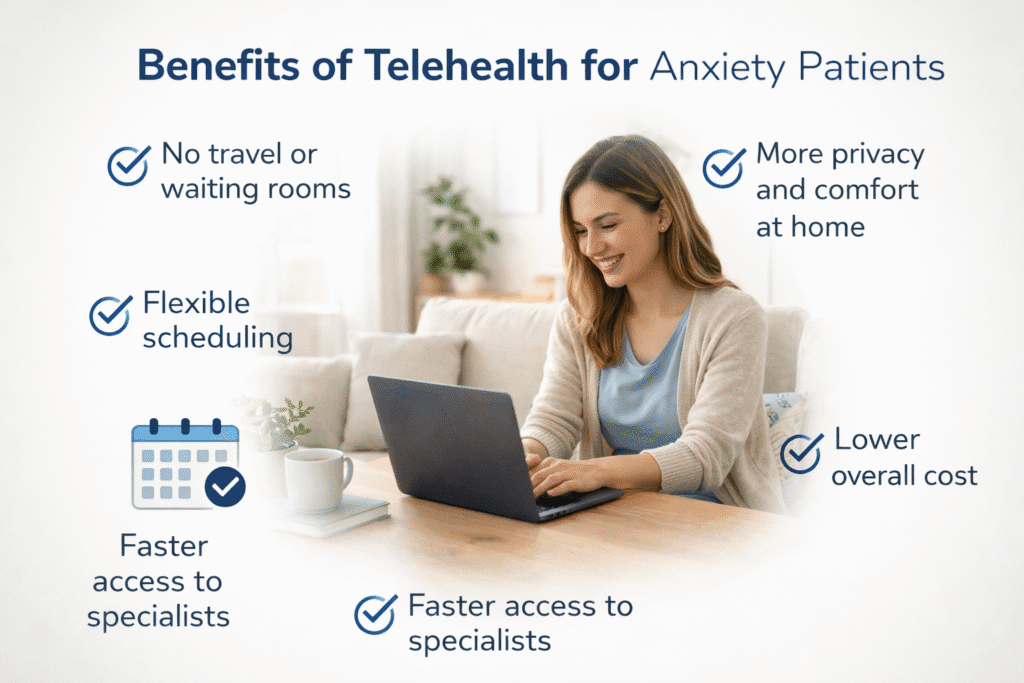
Telehealth removes many barriers that stop people from seeking care.
Key advantages
- No travel or waiting rooms
- More privacy and comfort at home
- Flexible scheduling
- Faster access to specialists
- Lower overall cost in many cases
For someone with social anxiety, logging in from home can reduce stress before therapy even begins.
Limitations and Safety Considerations
While telehealth is helpful, it is not perfect for everyone.
Important limitations
- Severe anxiety with crisis symptoms may need in-person care
- Internet or privacy issues can affect sessions
- Emergency support is limited during online visits
If someone has suicidal thoughts or severe panic attacks, immediate local care is always recommended.
Is Telehealth Safe and Effective for Anxiety?
Yes, when used appropriately.
Research shows that telehealth therapy for anxiety has outcomes similar to face-to-face treatment for many patients. Licensed providers follow strict privacy rules and clinical guidelines to protect patient safety.
However, effectiveness depends on:
- Regular attendance
- Honest communication
- A strong patient-provider connection
How to Choose the Right Telehealth Provider
Not all online services are the same. Choosing carefully matters.
What patients should check
- Licensed mental health professionals
- Clear privacy and data protection policies
- Experience treating anxiety disorders
- Transparent pricing and follow-up care
A good provider will explain your treatment plan clearly and answer questions without pressure.
Telehealth vs In-Person Therapy for Anxiety
Both options work. The best choice depends on the person.
Telehealth may be better if you:
- Feel anxious in clinical settings
- Have limited time or transportation
- Want consistent care from home
In-person care may be better if you:
- Have severe or complex symptoms
- Need close medical monitoring
Many patients use a mix of both over time.
Conclusion: Taking the First Step Toward Calm
Anxiety thrives in silence and avoidance.
Telehealth offers a safe, flexible, and proven way to get support without added stress.
If anxiety is affecting your life, starting care from home may be the easiest step forward. Help does not have to feel frightening. Sometimes, it begins with a simple click.
FAQs: Telehealth for Anxiety Disorders
Q1. Is telehealth effective for anxiety disorders?
A. Yes. Studies show telehealth therapy works well for many anxiety disorders, especially when sessions are regular and structured.
Q2. Can telehealth prescribe medication for anxiety?
A. Yes. Licensed psychiatrists can evaluate patients online and prescribe anxiety medications when appropriate.
Q3. Is telehealth private and confidential?
A. Reputable telehealth platforms follow strict privacy laws and use secure systems to protect patient information.
Q4. What equipment do I need for telehealth therapy?
A. Most patients only need a smartphone, tablet, or computer with internet access and a private space.
Q5. When should I choose in-person care instead of telehealth?
A. If anxiety is severe, includes self-harm risk, or needs emergency care, in-person treatment is recommended.