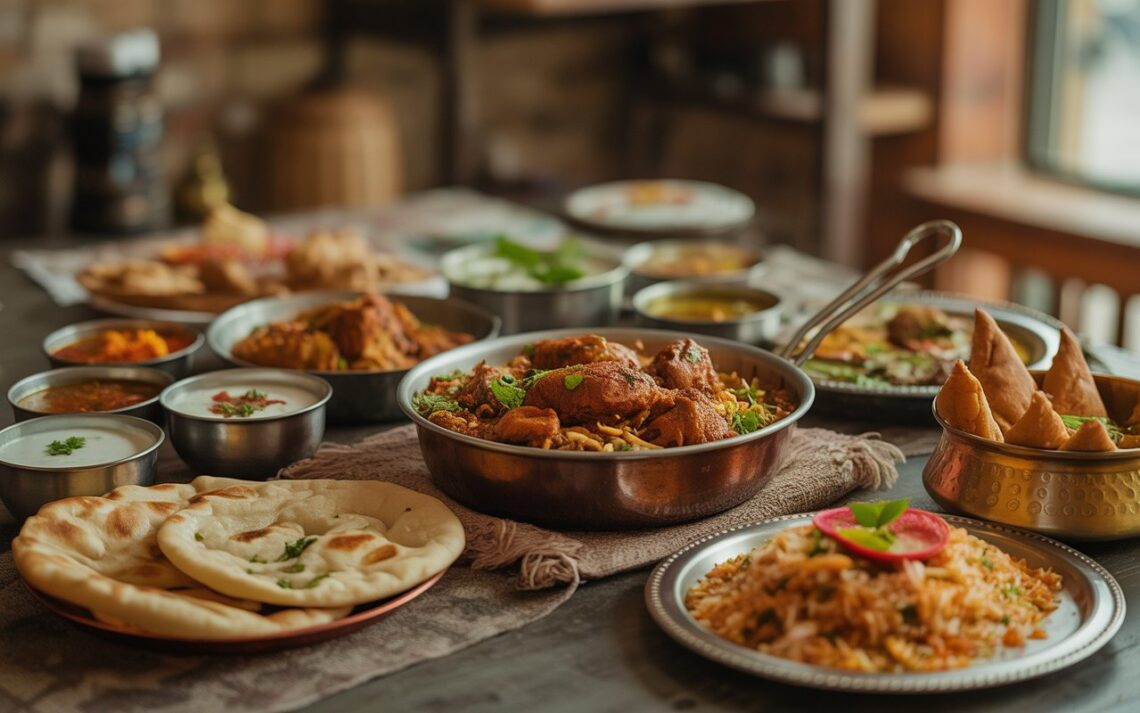
The smell of spices can stop you mid-step.
In fact, one bite of Pakistani food can pull you straight back home, even if home sits thousands of miles away.
People do not learn Pakistani food from cookbooks. Instead, they learn it by standing beside elders in the kitchen, watching quietly, and absorbing techniques through repetition. While growing up in Pakistani home kitchens, I watched meals come together without measurements. At the same time, cooks added spices by instinct, adjusted salt by taste, and judged timing through experience. Because of this, this lived knowledge allows Pakistani food to survive and thrive across generations.
People in Pakistan do not just eat food—they share it. Whether they serve a simple weekday daal or a lavish wedding spread, food carries emotion, hospitality, and identity. As a result, Pakistani cuisine feels deeply personal, especially for those living outside Pakistan.
What Is Pakistani Cuisine? (Clear, Expert Explanation)
Contents
- 1 What Is Pakistani Cuisine? (Clear, Expert Explanation)
- 2 Why Pakistani Food Is Loved Around the World
- 3 Most Loved Pakistani Dishes (And Why They Matter)
- 4 Regional Diversity That Shapes Pakistani Food
- 5 Pakistani Food vs Indian Food: A Clear Cultural Distinction
- 6 ALSO READ
- 7 Pakistani Street Food: The Soul of the Cities
- 8 Is Pakistani Food Healthy? (Honest, Balanced Answer)
- 9 Why Pakistani Food Carries Emotional Meaning
- 10 Conclusion: Discover Pakistani Food One Dish at a Time
- 11 FAQs About Pakistani Food
Pakistani cuisine is shaped by South Asian roots, Central Asian depth, and Middle Eastern influence. Its defining feature is slow, layered cooking, where spices are introduced at different stages rather than all at once.
Because of this approach allows flavors to develop gradually instead of overpowering the dish.
At its core, traditional Pakistani cooking values:
- Time over speed
- Technique over shortcuts
- Generosity over portion control
Meals are designed to nourish, satisfy, and bring people together—never rushed, never minimal.
Why Pakistani Food Is Loved Around the World
Pakistani food earns global recognition not because it follows trends, but because it delivers substance and soul.
Across regions such as the UK, USA, Canada, and the Middle East, Pakistani home kitchens and restaurants continue to thrive. In particular, diaspora communities use food to stay connected to their roots.
People love Pakistani food because of its:
- Bold yet balanced spice combinations
- Hearty, filling portions
- Strong cultural identity
- Wide range of meat and vegetarian dishes
- Social nature
Unlike many fusion cuisines, Pakistani food refuses to dilute itself to please. Instead, it stays authentic—and for that reason, authenticity becomes its greatest strength.
Most Loved Pakistani Dishes (And Why They Matter)
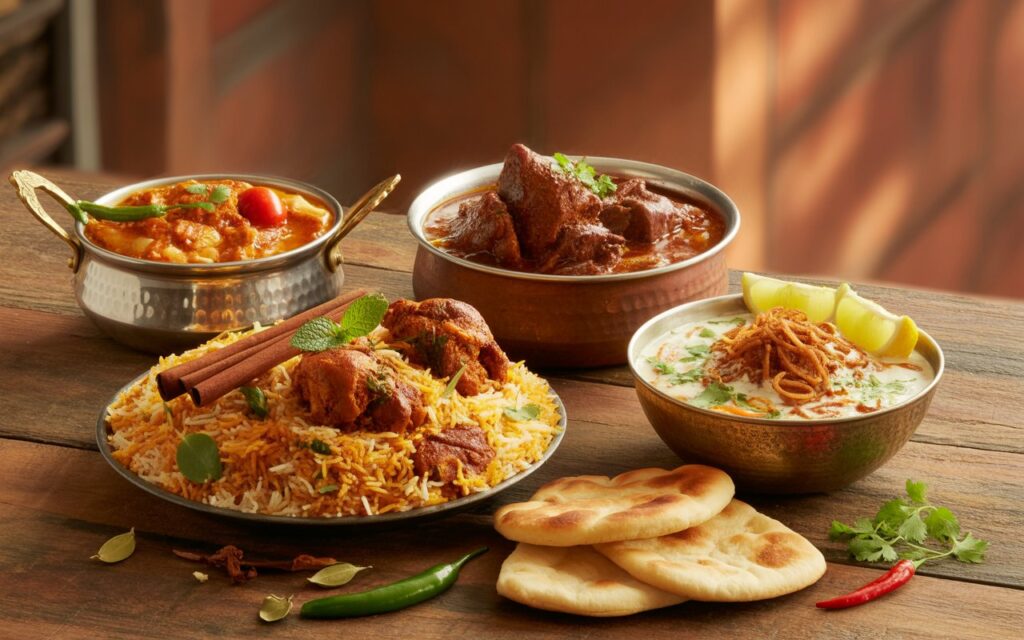
Biryani
Cooks prepare this layered rice dish with meat, whole spices, and aromatics. Traditionally, each step receives careful attention.
Traditional cooks in Karachi and Lahore cook the rice and meat separately first. By doing so, they protect texture and aroma, allowing the final steam (dum) to unite flavors without turning the rice mushy.
Nihari
Cooks prepare this slow-cooked meat stew for early morning meals. Historically, families associate it with patience and care.
Cooks simmer Nihari overnight on extremely low heat. As a result, tough cuts of meat break down and release collagen, creating its signature silky gravy—something fast cooking can never achieve.
Karahi
Karahi is a tomato-based curry cooked on very high heat in a wok-style pan.
In practice, real karahi cooking depends on strong heat and constant stirring. As a result, the extra water dries out quickly, and the flavor becomes rich on its own. Instead of using heavy spice mixes, cooks let the tomatoes, meat, and heat do the work naturally. Because of this, authentic karahi tastes bold yet clean.
Haleem
Haleem is a thick, hearty dish made from lentils, wheat, and meat.
Traditionally, cooks prepare Haleem slowly and stir it again and again. Over time, this slow stirring breaks down the grains and softens the meat. Because of this process, Haleem becomes filling, nutritious, and easy to digest. That is why people have long eaten it as a strength-giving meal, especially during long days or special months.
Regional Diversity That Shapes Pakistani Food
Pakistani food changes from place to place. Because of differences in geography, weather, and culture, the cuisine shows great variety.
As a result, every region adds its own taste and cooking style.
Punjabi Cuisine
Punjabi food is rich and comforting.
For example, it often includes:
- Rich gravies
- Butter and cream
- Wheat-based breads like naan and roti
Overall, Punjabi meals focus on fullness and warmth.
Sindhi Cuisine
Sindhi food tastes bold and sharp.
In particular, it is known for:
- Tangy, chili-forward flavors
- Rice and fish dishes
- Bold spice usage
Because of this, Sindhi food feels vibrant and powerful.
Pashtun Cuisine
Pashtun food keeps things simple.
Instead of heavy spices, it focuses on:
- Grilled meats
- Minimal seasoning
- Emphasis on natural meat flavor
As a result, the meat itself becomes the star of the dish.
Balochi Cuisine
Balochi food values patience.
Usually, it includes:
- Slow-roasted meats
- Very light seasoning
- Earthy, smoky taste
Because of the slow cooking, the flavors stay deep and natural.
Taken together, each region adds its own identity. At the same time, all these styles stay connected, creating variety without losing unity.
Pakistani Food vs Indian Food: A Clear Cultural Distinction
Pakistani food is often grouped with Indian food, especially outside South Asia. However, while both cuisines share history, they grew in different cultural, religious, and geographic settings. Because of this, their flavors and cooking styles developed in different ways.
Core Culinary Differences
Pakistani cuisine grew with strong Central Asian and Mughal influence. On the other hand, Indian cuisine reflects many regional and vegetarian traditions.
As a result, clear differences appear.
Protein Focus
Pakistani food uses more meat-based dishes. For example, beef, mutton, and chicken appear often.
In contrast, Indian food includes more vegetarian and lentil-based meals due to long-standing dietary practices.
Spice Structure
Pakistani cooking prefers whole spices used lightly and added in stages.
Meanwhile, Indian cooking more often uses ground spice mixes added earlier in the process.
Flavor Profile
Pakistani gravies usually taste savory and rich. In most cases, they avoid sweetness.
By comparison, Indian gravies may include sweetness from onions, tomatoes, cream, or sugar-based elements.
Cooking Technique
Pakistani dishes focus on slow simmering, dum cooking, and long heat exposure.
On the other hand, Indian dishes often use quick frying and frequent tempering.
ALSO READ
Is Indian Food Healthy? The Surprising Truth You’ll Love
Cultural Context Matters
In Pakistan, food traditions were shaped by nomadic influences, meat availability, and Mughal royal kitchens. This history explains the preference for hearty portions, slow-cooked stews, and robust flavors.
In contrast, Indian cuisine reflects extreme regional diversity, climate variation, and religious dietary practices—resulting in lighter gravies in some regions and complex vegetarian traditions in others.
Despite similarities in ingredients like rice, lentils, and spices, Pakistani and Indian food are not interchangeable. Each cuisine expresses its own history, values, and relationship with food.
Pakistani food is best understood not as a variation of Indian food, but as a distinct culinary identity—one defined by depth, patience, and bold simplicity.
Pakistani Street Food: The Soul of the Cities
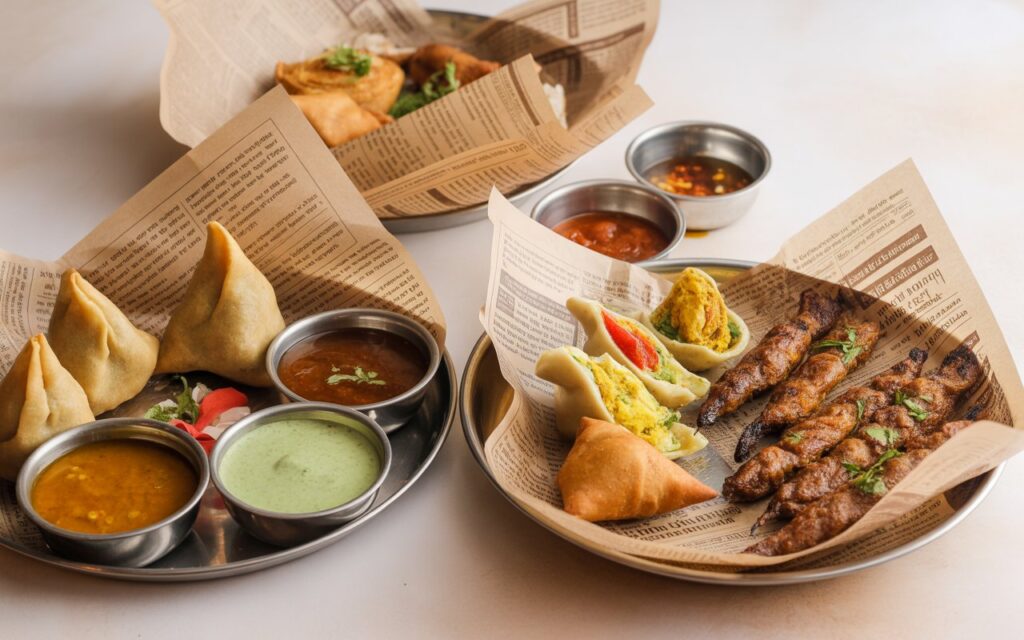
Street food is the heartbeat of Pakistani cities. It is quick, affordable, and full of character. In everyday life, people rely on street food for both convenience and flavor.
Some of the most popular street foods include
- Bun kebab
- Gol gappa (pani puri),
- Samosas
- Chaat.
These foods do more than just fill the stomach. In fact, they bring people together. Across cities, street food creates daily social connections between people of different ages, backgrounds, and lifestyles.
Is Pakistani Food Healthy? (Honest, Balanced Answer)
Pakistani food can be very healthy, especially when cooked at home.
Traditional meals often include:
- Lentils for plant-based protein
- Natural spices that support digestion
- Fresh vegetables, grains, and yogurt
However, honesty matters.
Deep-fried snacks, excessive ghee, and restaurant-style gravies can make Pakistani food heavy when eaten daily. In contrast, home-style dishes like daal, sabzi, grilled meats, and yogurt-based sides offer balanced nutrition when oil and portions are controlled.
Health depends on how the food is prepared—not the cuisine itself.
Why Pakistani Food Carries Emotional Meaning
Pakistani food is cooked with care and served with generosity.
Guests are honored. Plates are refilled. No one is rushed.
Because of this, food becomes more than nourishment. It becomes memory, comfort, and emotional connection—especially for those living far from home.
Conclusion: Discover Pakistani Food One Dish at a Time
Pakistani food represents culture, patience, and community.
From slow-cooked curries to lively street snacks, it offers flavors that stay with you long after the meal ends.
If you want to understand a culture through taste, start with Pakistani food—one dish at a time.
FAQs About Pakistani Food
Q1. What makes Pakistani food unique?
Slow cooking, layered spices, and strong cultural roots.
Q2. Is Pakistani food always spicy?
No. Spice levels are easily adjustable.
Q3. What is the most popular Pakistani dish?
Biryani remains the most widely loved.
Q4. Is Pakistani food healthy for daily eating?
Yes, especially when home-cooked with balanced oil.
Q5. Can beginners cook Pakistani food at home?
Absolutely. Daal, pulao, and chicken karahi are great starting dishes.